Booking choice: The Lisbon baking class, from $61 per person. Check dates Tour details
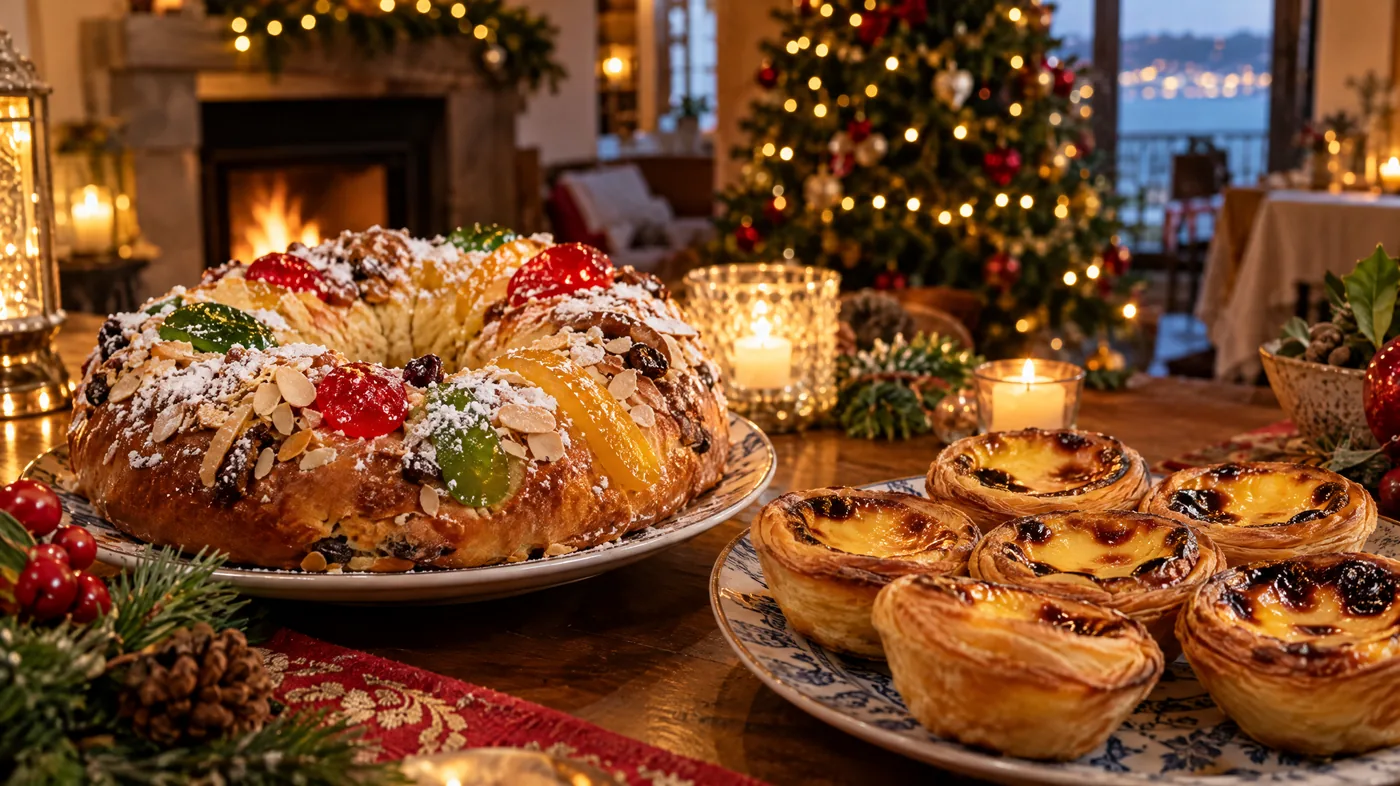
Portugal does Christmas with sugar. In December the bakeries stack bolo-rei by the window, the cafés fry sonhos and rabanadas, and families plan the consoada, the big supper of Christmas Eve, around salt cod and a table of sweets.
Below: the sweets to look for, the story of bolo-rei, the dates of the season, the holiday hours at Pastéis de Belém, and how to bake your own pastéis de nata over the holidays. For where the custard tart itself comes from, read our pastel de nata history.
The quick answer
The star of a Lisbon Christmas is bolo-rei, a ring of sweet bread with candied fruit and nuts, eaten from Christmas to Dia de Reis on 6 January. Around it come bolo-rainha (no candied fruit), sonhos, rabanadas, filhoses, azevias and broas. Pastéis de Belém opens every day and closes at 7 PM on 24, 25 and 31 December and 1 January. Pastel de nata classes run through the winter, and every class on this site cancels free up to 24 hours before.
What sweets do people eat at Christmas in Lisbon?
Bolo-rei above all, plus bolo-rainha, fried sonhos and rabanadas, filhoses, azevias, broas de Natal and, on grand tables, a lampreia de ovos.
Most of these are fried, sugared and dusted with cinnamon, and most turn up on the Christmas Eve table after the cod. Sonhos ("dreams") are soft doughnut puffs, some made with pumpkin. Rabanadas are Portugal's take on French toast: bread soaked in sweetened milk with lemon zest, dipped in egg, fried and rolled in cinnamon sugar. Filhoses are fried dough too, crisp and flat in the Alentejo, soft and round further north.
Then come the smaller things. Azevias are little fried turnovers filled with chickpea or almond paste. Broas de Natal are small oval cakes with sweet potato, cinnamon and aniseed. The showpiece is lampreia de ovos, egg yolk sweets shaped like a lamprey, eel-like and glossy, with candied fruit for the eyes. Many Lisbon cafés sell them by the piece through December, so you can taste the lot without cooking.
| Sweet | What it is | Look for it |
|---|---|---|
| Bolo-rei | A ring of sweet bread with candied fruit and nuts | Every bakery, Christmas to 6 January |
| Bolo-rainha | The same ring with nuts and dried fruit, no candied fruit | Next to the bolo-rei |
| Sonhos | Soft fried dough puffs, sugared | Cafés and pastry shops |
| Rabanadas | Bread soaked in milk and egg, fried, cinnamon sugar | Cafés and pastry shops |
| Filhoses | Fried dough with orange zest or pumpkin | Pastry shops and home tables |
| Azevias | Small fried turnovers with chickpea or almond | Pastry shops |
| Broas de Natal | Small cakes of sweet potato, cinnamon and aniseed | Bakeries |
| Lampreia de ovos | Egg yolk and sugar sweet shaped like a lamprey | Confeitarias at Christmas |
What is bolo-rei and where does it come from?
A crown-shaped sweet bread with candied fruit, nuts and raisins. The recipe came from France, and Confeitaria Nacional in Lisbon says it introduced it to Portugal.
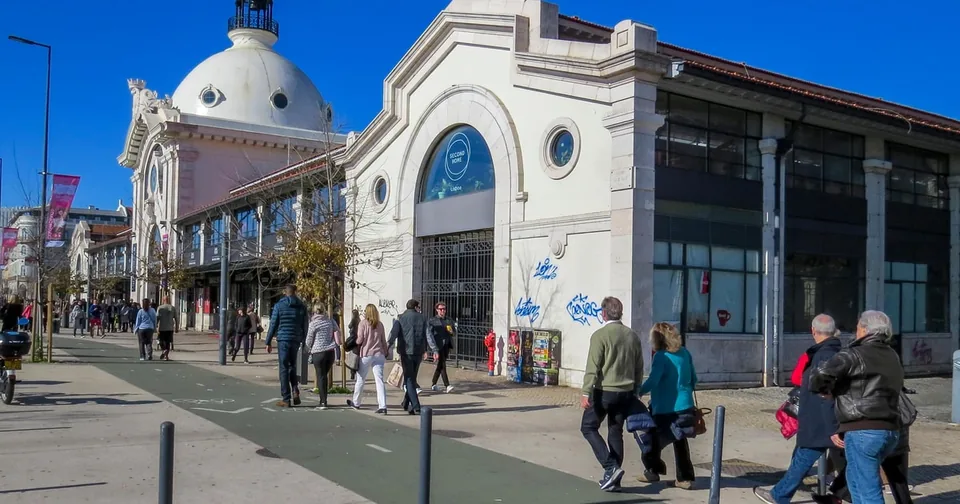
Confeitaria Nacional, on Praça da Figueira in the Baixa since 1829, says the founder's youngest son brought the recipe back from France in 1875. The shop still sells it, and it says only the owner and its oldest pastry chef know the exact recipe. The ring stands for a crown, the crown of the Three Kings, which is why the cake leads up to Dia de Reis on 6 January.
The name nearly did not survive. After Portugal became a republic in 1910, a cake called "king" looked out of step, and bakers tried names such as Bolo-Presidente. None of them stuck. The old custom of hiding a dried fava bean and a small gift, the brinde, inside has faded: whoever found the bean paid for next year's cake. A 2011 law stopped gifts being mixed straight into food, and the food safety authority, ASAE, has said a brinde is allowed only when it is clearly separate from the food and safe, so most bakeries leave it out.
| Year | What happened |
|---|---|
| 1829 | Confeitaria Nacional opens on Praça da Figueira |
| 1875 | The bolo-rei recipe arrives from France, the shop says |
| 1910 | The Republic; bakers try new names for the "king" cake |
| 2011 | A law bars gifts mixed directly into food; the brinde fades |
When do people in Portugal eat bolo-rei and the Christmas sweets?
Bakeries sell them all through December, and the bolo-rei is eaten until Dia de Reis on 6 January. The biggest night is the consoada supper on 24 December, after which many families go to the midnight Mass.
The consoada is a fish supper, not a meat feast. The classic is boiled bacalhau with potatoes, cabbage, eggs and plenty of olive oil, followed by the sweets. Many families then go to the Missa do Galo, the midnight Mass. Christmas Day is for the family lunch, and the bolo-rei keeps coming out until Dia de Reis.
December has two more public holidays in Portugal, both on Tuesdays this year, so expect busy streets and long weekends for locals. Shops and cafés keep shorter hours on the big days, and some close.
| Date | What happens | For your visit |
|---|---|---|
| Tuesday 1 December 2026 | Restoration of Independence, public holiday | Some shops closed; bakeries busy |
| Tuesday 8 December 2026 | Immaculate Conception, public holiday | A long weekend for many locals |
| Thursday 24 December 2026 | Consoada supper and the Missa do Galo | Early closing; Pastéis de Belém until 7 PM |
| Friday 25 December 2026 | Christmas Day, public holiday | Family lunch; Pastéis de Belém until 7 PM |
| Thursday 31 December 2026 | New Year's Eve | Pastéis de Belém until 7 PM; celebrations at midnight |
| Friday 1 January 2027 | New Year's Day, public holiday | Pastéis de Belém until 7 PM |
| Wednesday 6 January 2027 | Dia de Reis | The last day of the bolo-rei season |
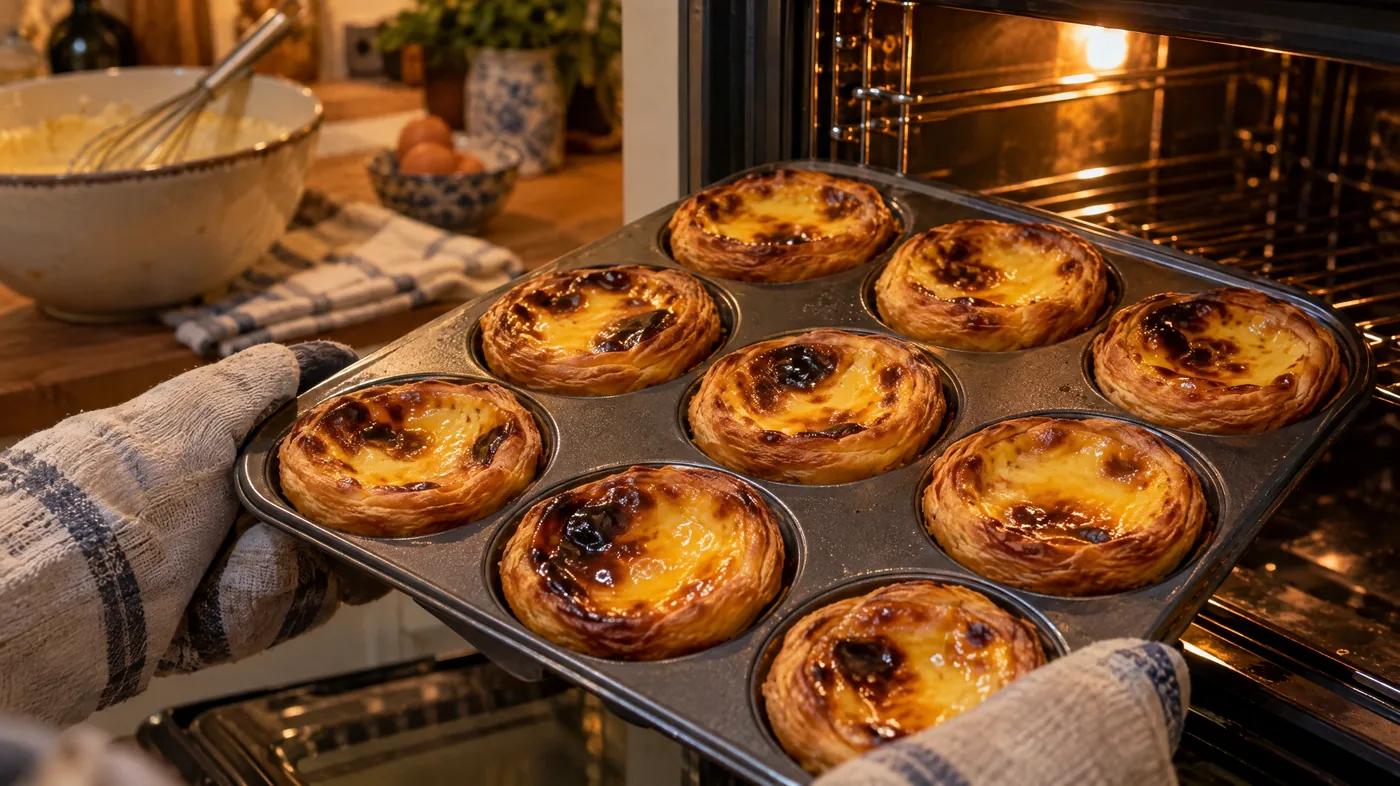
Make your own pastéis de nata near Belém on a winter day, with a glass of port and a ginjinha tasting at the end.
Check dates for the Lisbon baking classIs Pastéis de Belém open at Christmas?
Yes, every day. On 24, 25 and 31 December and 1 January it closes early, at 7 PM, instead of the usual 9 PM.
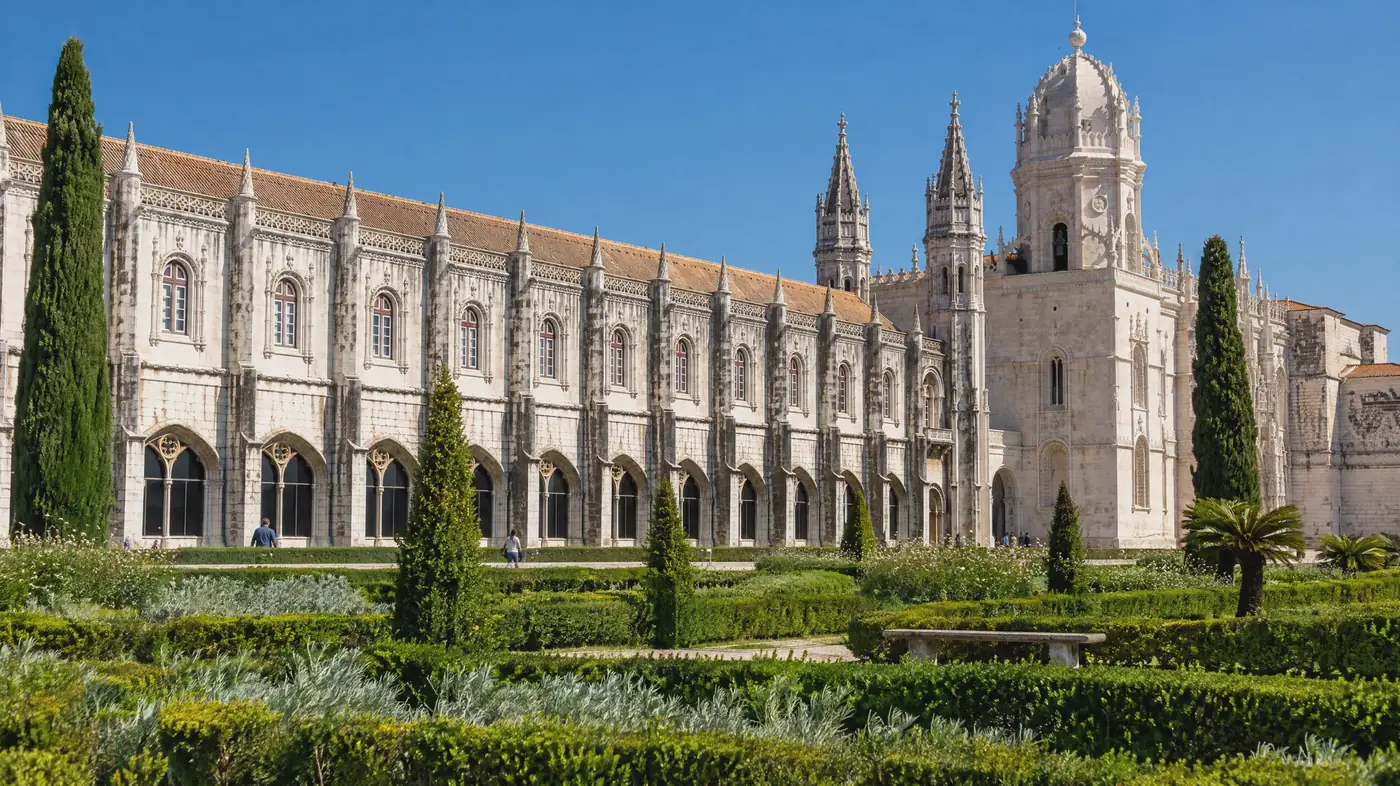
The bakery at Rua de Belém 84 to 92 opens at 8 AM all year. Outside summer it closes at 9 PM, and on the four holiday dates at 7 PM. Its menu lists bolo-rei and bolo-rainha for the Christmas period, sold by weight at €25 and €27 per kilo. Next door, the Jerónimos Monastery closes on 25 December and 1 January, so a Christmas Day visit to Belém is about the tarts and the riverside, not the cloister.
Manteigaria's Belém shop lists 8 AM to 9 PM on its own page. Check it on the day for the holidays. On a holiday the trick is to go early, before the tour groups.
| Dates | Pastéis de Belém hours |
|---|---|
| Most of the year | 8 AM to 9 PM |
| 1 July to 30 September | 8 AM to 10 PM |
| 24 and 25 December | 8 AM to 7 PM |
| 31 December and 1 January | 8 AM to 7 PM |
Can you take a pastel de nata class over Christmas?
Yes. The classes run through the winter, so pick a date in the calendar and check the holidays, 24, 25 and 31 December and 1 January, when you book.
Each class shows its open days and start times on the booking page, and all of them cancel free up to 24 hours before. That makes a class easy to slot in between family plans. The Lisbon baking class near Belém is the busiest, rated 4.9 from 3,331 reviews, from $61 with juice, coffee, port and a ginjinha tasting. It welcomes children from age 6, which suits a family holiday.
For a second taste of Portuguese baking, the two-recipe class adds a second traditional dish, chosen for each session: on some days codfish fritters, on others farófias, the poached meringue in custard. Small groups suit the season too: the small-group class by Belém takes eight guests at most and offers morning and afternoon starts. A class is a good present, too. Book a date for someone you are travelling with, and the box of tarts comes home with you.
| Class | From | What you make | Drinks | Good to know |
|---|---|---|---|---|
| Lisbon baking class (near Belém) | $61 | Dough and custard, start to finish | Juice, coffee, port, ginjinha | From 6 |
| Small-group class by Belém | $72 | Everything from scratch, 8 guests at most | Coffee or tea, 1 alcoholic drink | Morning or afternoon start |
| Two-recipe class | $60 | Laminated pastry plus a second recipe | Tea | Standing for about 1 hour 20 minutes |
| Bakery masterclass (Baixa) | $78 | Puff pastry from zero, at least 3 tarts | Barista drink, no alcohol | A working bakery kitchen |
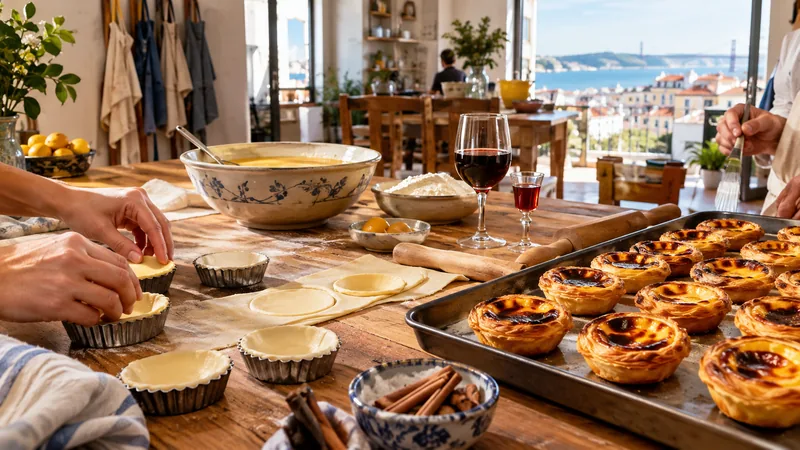
Two hours from dough to oven near Belém, then warm tarts with port and ginjinha: an easy winter afternoon.
Explore the Lisbon baking class Tour detailsCan you take bolo-rei or pastéis de nata home on a plane?
Generally yes. Both are solid foods, so they are generally allowed in hand luggage, but check your airline. Pack them in a bakery box and keep them out of the fridge.
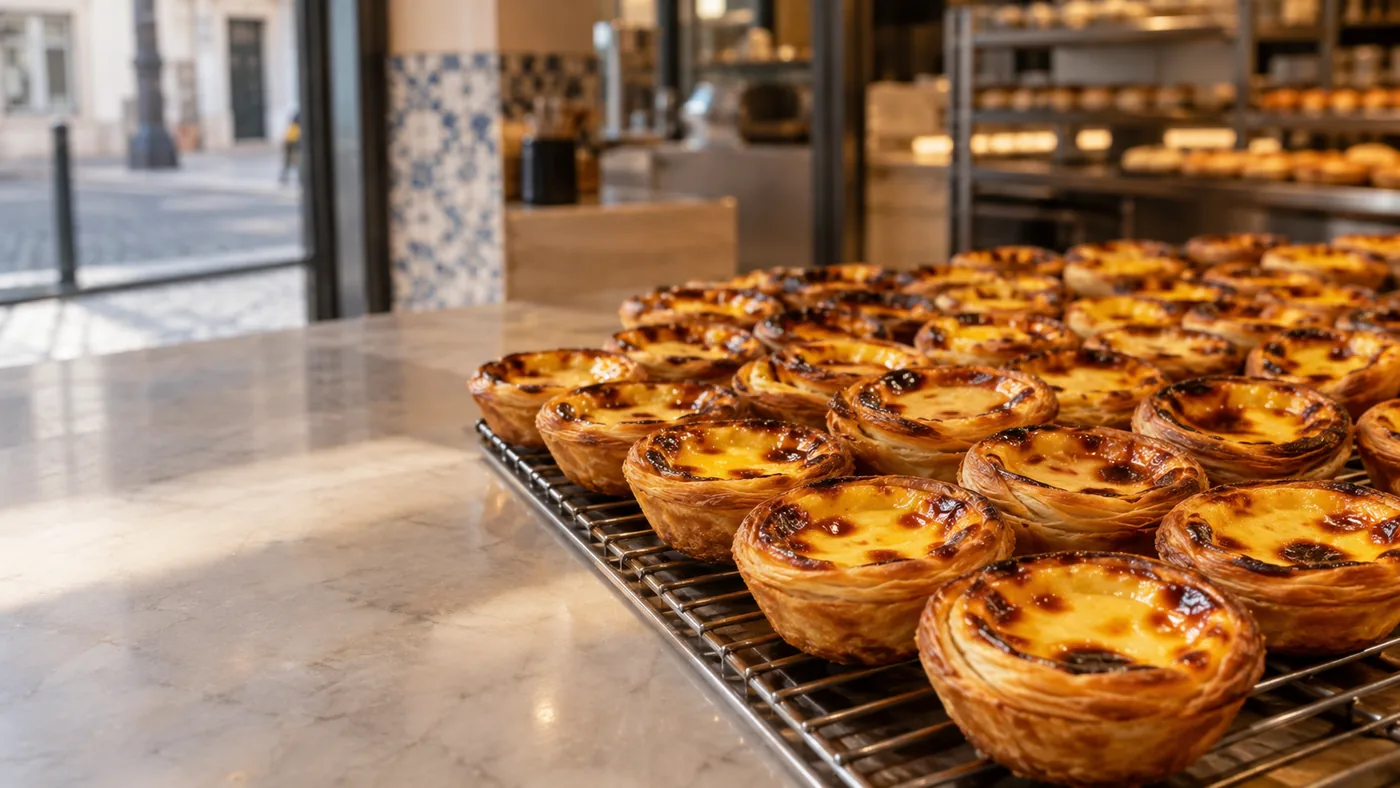
The custard in a pastel de nata is set, not a liquid, and a bolo-rei is a bread. Bakeries sell boxes for travel, and Manteigaria takes orders of any size. Manteigaria's advice for keeping tarts: out of the box, on a plate in a cool, dry place, never in the fridge, where the pastry goes soft. They are still crisp the next day. Warm them for 2 to 3 minutes in an oven at 180 C, not in the microwave.
The best souvenir is the recipe. A class sends you home knowing how to make the tarts, and our home baking guide covers the oven tricks for a normal kitchen.
| Sweet | Travels well? | Keep it |
|---|---|---|
| Pastéis de nata | Yes, in a bakery box | Cool, dry place, not the fridge; reheat at 180 C for 2 to 3 minutes |
| Bolo-rei | Yes, it is a bread | Wrapped, at room temperature |
| Sonhos and rabanadas | Best eaten fresh | Eat them on the day |
Frequently asked questions
What is the traditional Christmas cake in Portugal?
Bolo-rei, a ring of sweet bread with candied fruit, nuts and raisins. It is eaten from Christmas until Dia de Reis on 6 January. Bolo-rainha is the version without candied fruit.
Who brought bolo-rei to Portugal?
Confeitaria Nacional in Lisbon says it did: the founder's son brought the recipe from France in 1875. The shop has stood on Praça da Figueira since 1829.
What are Pastéis de Belém's Christmas hours?
It is open every day from 8 AM. On 24, 25 and 31 December and 1 January it closes at 7 PM instead of 9 PM.
Do pastel de nata classes run at Christmas?
They run through the winter; check the calendar for 24, 25 and 31 December and 1 January. Every class on this site cancels free up to 24 hours before.
Ready to book
Choose your class
Free cancellation up to 24 hours before on every option. Prices are from-prices in USD and move with the season.
Lisbon Pastel de Nata Baking Class
- All ingredients and utensils
- Chefs or instructors
- Homemade juice, coffee and water
Small-Group Pastéis de Nata Class by Belém
- Pastry-making lesson
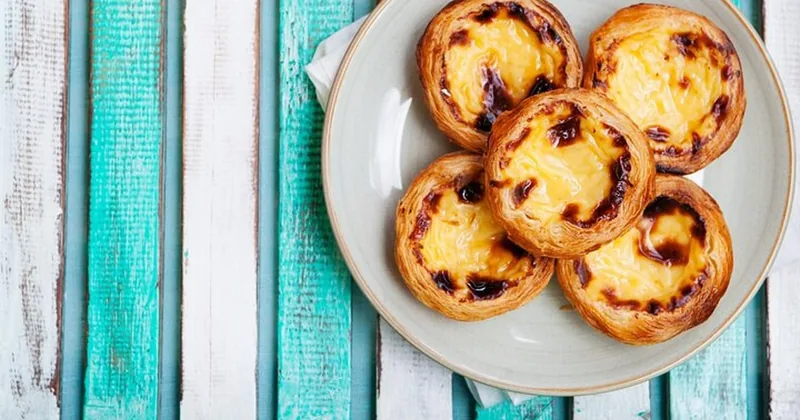
- Your own pastéis de nata
- Coffee, tea and water
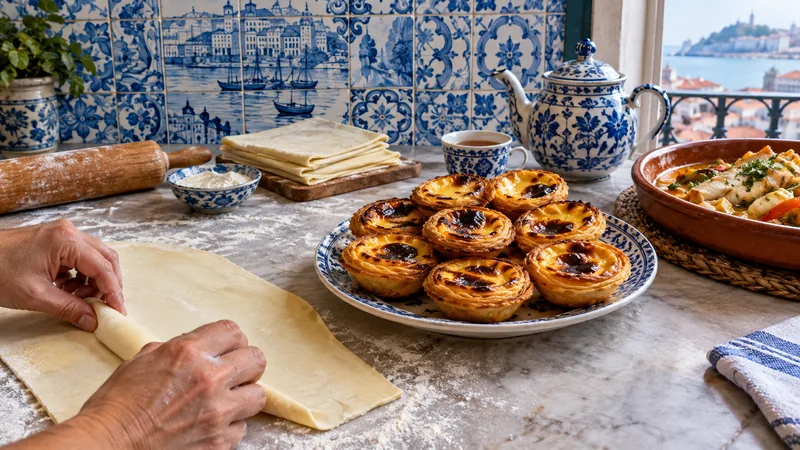
2-Hour Class: Pastel de Nata and a Second Recipe
Fold and laminate the pastry, then a second Portuguese sweet and a light meal