Booking choice: The Lisbon baking class, from $61 per person. Check dates Tour details
Home pastéis de nata fail for two reasons: the oven is too cool and the pastry is too thick. Both are fixable with what you already own.
This guide covers the shortcuts, the tins, the heat, a single big tart for a crowd, and the questions people ask on the way home from Lisbon: how to keep them, how to reheat them and whether they fly. For the full method with quantities, see our pastel de nata recipe.
The quick answer
Yes, you can. Use a 12-cup muffin tin, homemade or ready-made all-butter puff pastry rolled into a log, and the hottest oven you have, with a baking stone on the upper-middle shelf. Finish under the grill for 2 minutes if the tops are pale. Keep leftovers on a plate, out of the fridge, and reheat at 180°C (350°F) for 2 to 3 minutes. To learn the pastry by hand first, the Lisbon baking class takes 2 hours, from $61.
Can you make pastel de nata at home?
Yes. With a muffin tin and a very hot oven you get crisp pastry and a set custard. Expect fewer dark spots than in Lisbon unless you use the grill.
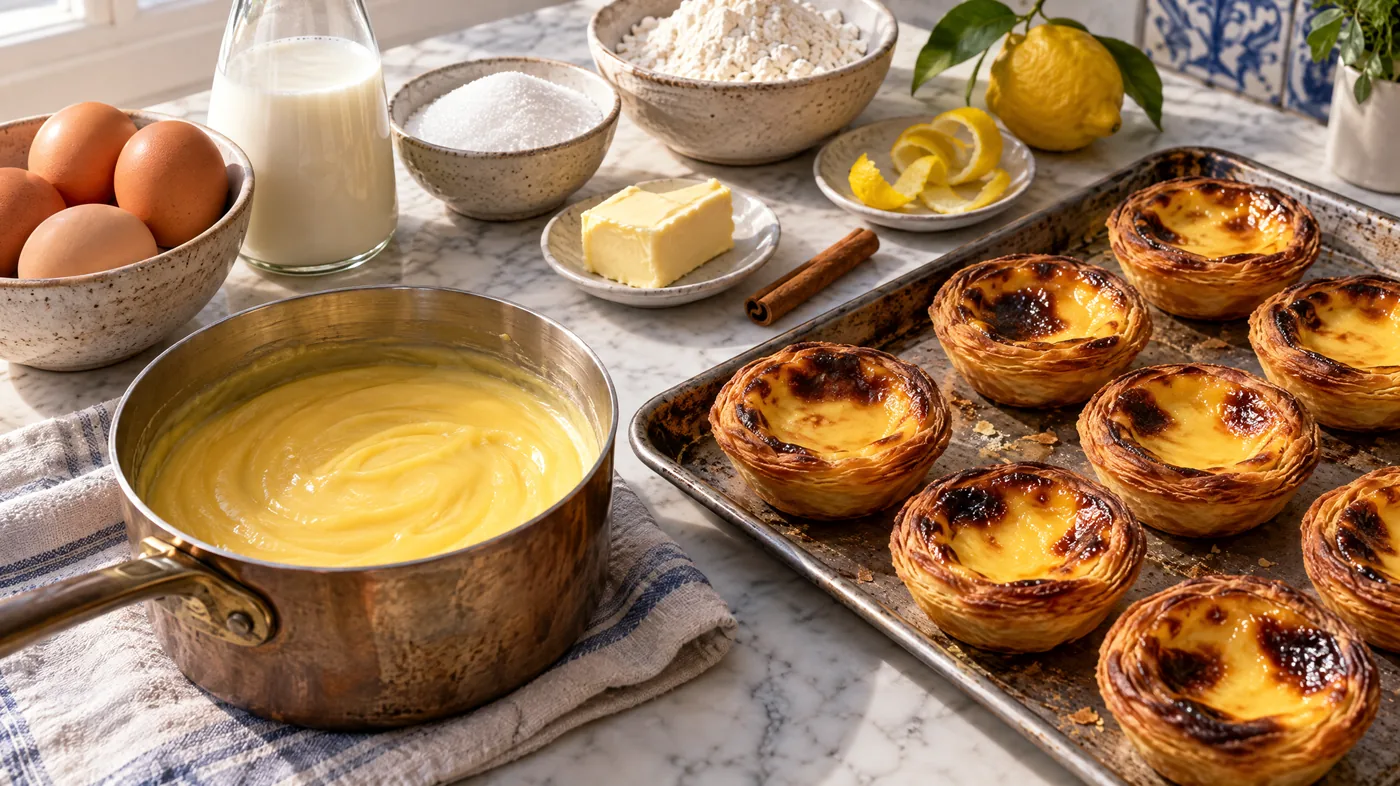
The recipe is simple. What makes it hard is the heat. Bakeries bake their tarts fast in very hot ovens. At home, recipes from America's Test Kitchen to BBC Good Food work around that with longer bakes, a preheated stone and a blast under the grill.
Plan about four hours from start to finish, most of it chilling. You can make the pastry log and the custard the day before.
Can you use shop-bought puff pastry?
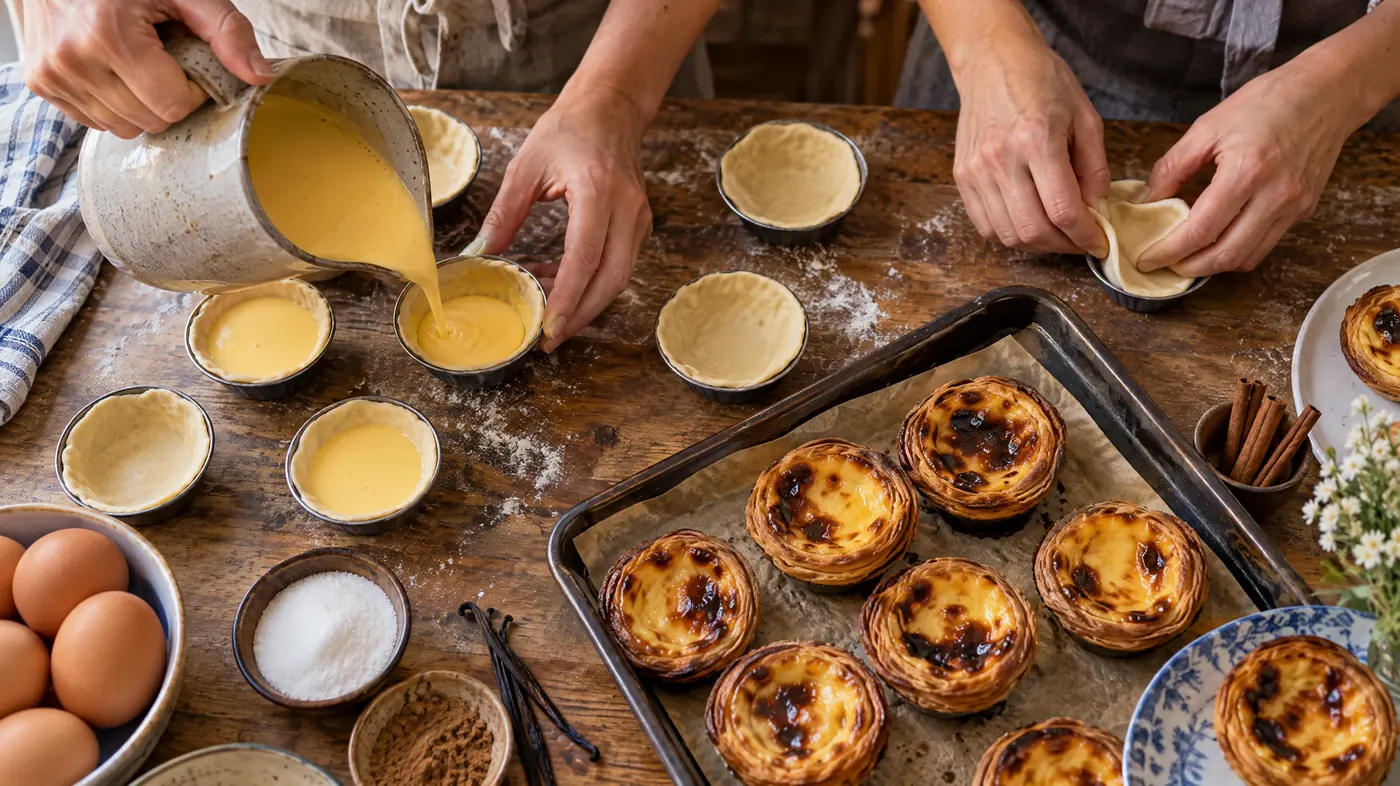
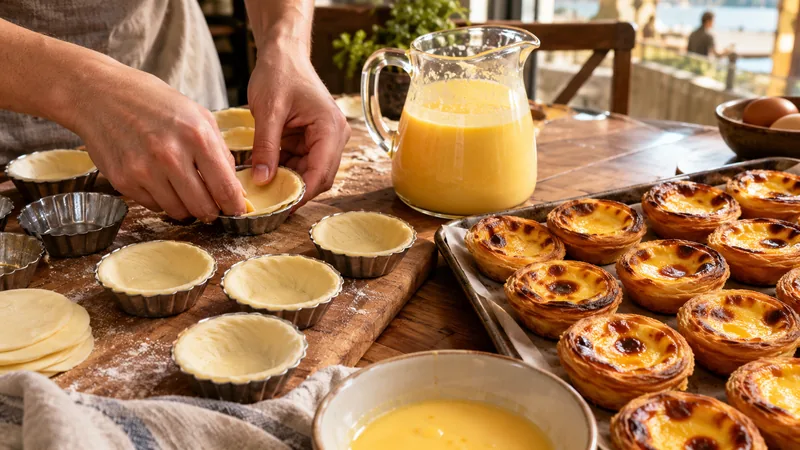
Yes, and it is the best shortcut. Roll an all-butter sheet up tightly into a log, chill it, slice it and press the rounds into the tin as you would homemade pastry.
The slices keep the spiral that gives the tart its crackly layers. Darina Allen's quick version in the Irish Examiner uses 900 g of puff pastry for 24 tarts, a stovetop custard of eggs, sugar, cornflour and milk, and a 230°C (450°F) oven for 16 to 20 minutes.
Bakeries and some classes work the same way. The Porto workshops use dough made beforehand, because good puff pastry takes hours, and spend the class on the custard, shaping and baking.
Custard, shaping and baking on ready pastry in Porto, with port, coffee, snacks and a box to take your tarts away.
Check dates for the Porto class with port wineWhat tin should you use for pastéis de nata?
A standard 12-cup muffin tin works well. Traditional fluted steel tins are smaller and bake faster, and they give the classic shape.
Grease the tin well, or the custard welds itself to the edges. The table shows how the main options compare.
| Tin | Yield | Oven | Time | Source |
|---|---|---|---|---|
| 12-cup muffin tin | 12 | 230°C (450°F) on a baking stone | 27 to 30 minutes | America's Test Kitchen |
| Traditional pastry cups | 16 | 230°C (450°F) | 21 to 25 minutes | America's Test Kitchen |
| Individual tins, very hot | 8 | 260°C (500°F), then the grill | 5 minutes plus 2 | Nuno Mendes, BBC Good Food |
| Muffin tins, ready pastry | 24 | 230°C (450°F) | 16 to 20 minutes | Darina Allen, Irish Examiner |
| One 22 to 23 cm springform | 1 big tart, 8 slices | 200°C (400°F), then 180°C (350°F) | About 1 hour 15 minutes in all | Esther Clark, BBC Good Food |
How do you get the burnt spots in a home oven?
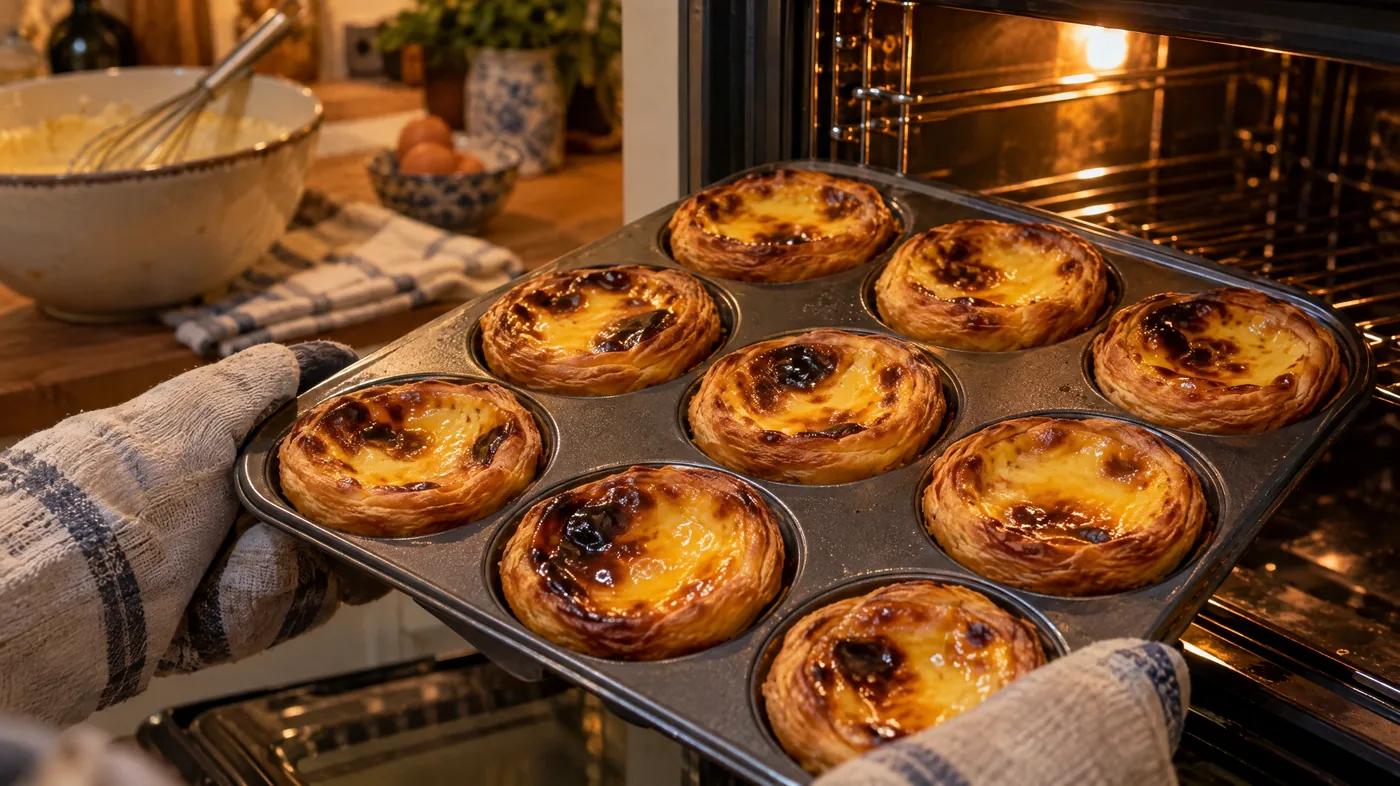
Heat the oven to its maximum with a stone or heavy tray inside for 45 minutes, bake on the upper-middle shelf and finish under a hot grill for about 2 minutes.
The dark blisters are sugar in the custard caramelising in fierce heat. Fan ovens brown more evenly, and a preheated stone sends heat straight into the base so the pastry crisps before the custard overcooks. Watch the grill stage closely. It turns from spotted to burnt in seconds.
Pull the tarts when the custard is puffed and still wobbles. It sinks and sets as it cools.
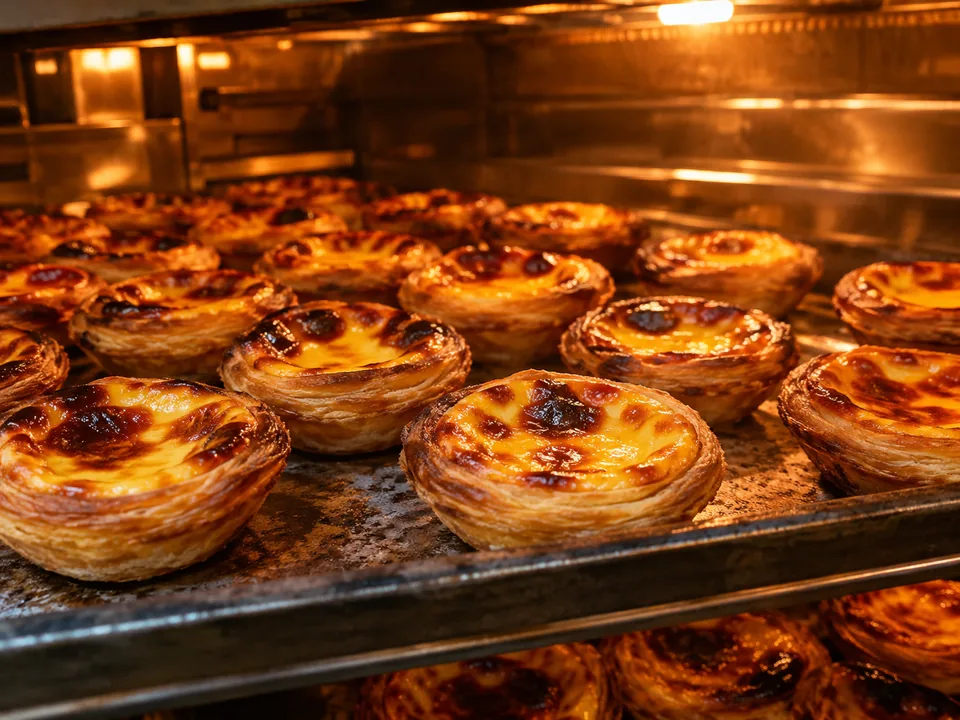
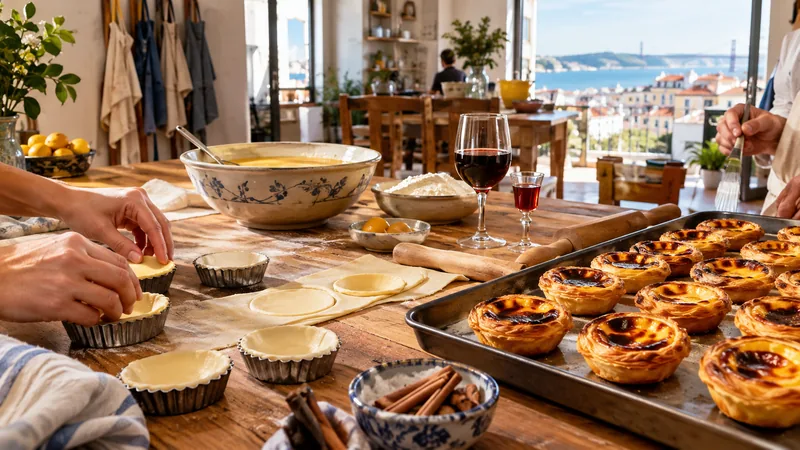
Bake in a professional oven near Belém and see what fierce heat does to the custard, with port and a ginjinha tasting. 4.9 stars from 3,331 reviews.
Explore the Lisbon baking class Tour detailsHow do you make one big pastel de nata?
Line a 22 to 23 cm springform tin with puff pastry, blind-bake it, then fill it with custard and bake it slowly, finishing under the grill. BBC Good Food's giant tart serves 8.
Esther Clark's recipe on BBC Good Food uses a 500 g block of all-butter puff pastry, blind-baked at 200°C (180°C fan, 400°F) for 25 minutes and a further 10 to 15 minutes after a brush of egg white. The custard of milk, a little double cream, 7 yolks, flour and a syrup goes in at 180°C (160°C fan, 350°F) for 35 to 40 minutes, then 2 to 3 minutes under the grill.
It slices like a cheesecake and makes a good party dessert. Do not expect the shatter of a small tart. The ratio of pastry to custard is different.
How do you store pastéis de nata?
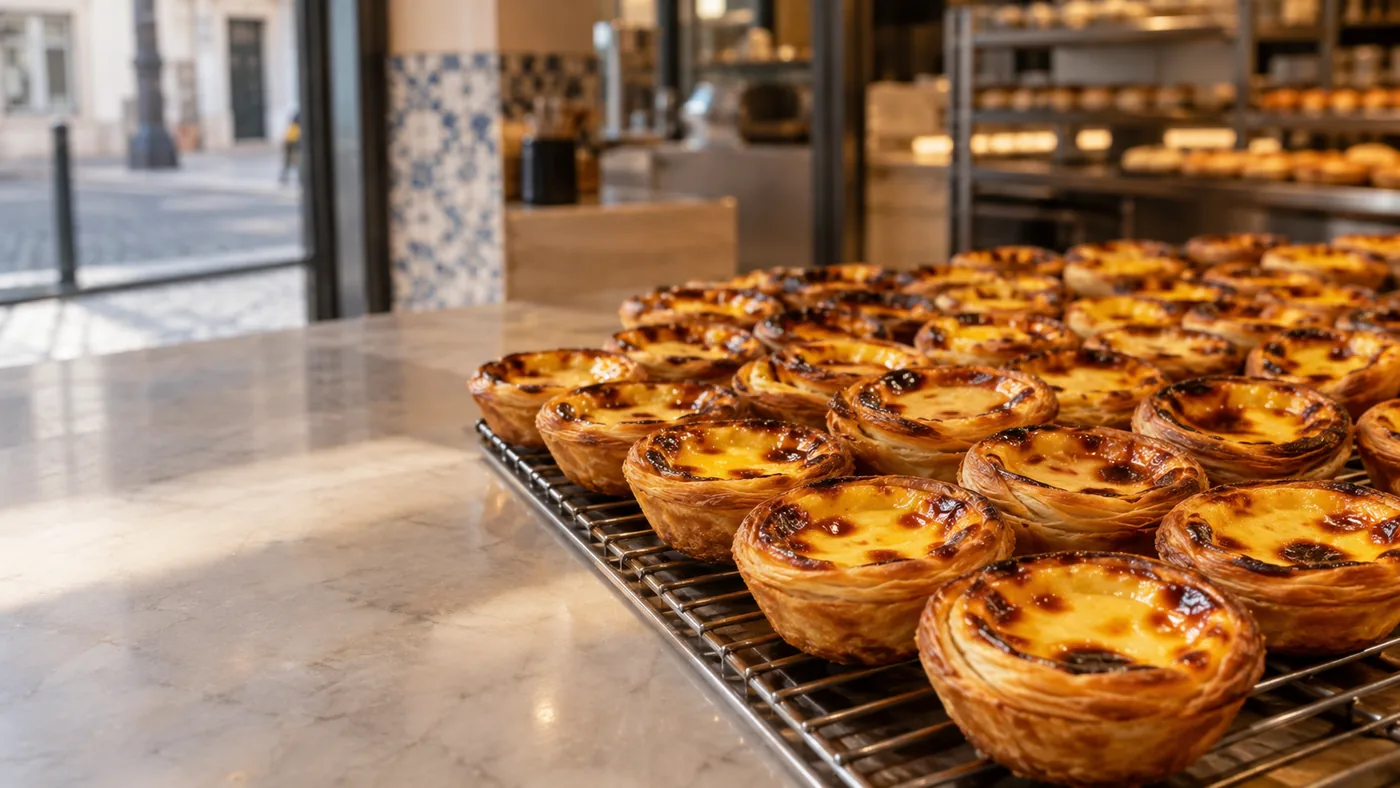
Out of the box, on a plate, somewhere cool and dry. Not in the fridge, says Manteigaria, because the pastry loses its crunch. They stay crisp to the next day.
Eat them the day they are baked if you can. A closed box traps steam and softens the pastry, so open it as soon as you get home. Manteigaria does not recommend freezing. If you must, thaw them at room temperature and then warm them in the oven.
For baking ahead, freeze or chill the parts instead. America's Test Kitchen keeps the pastry log and the custard in the fridge for up to 12 hours.
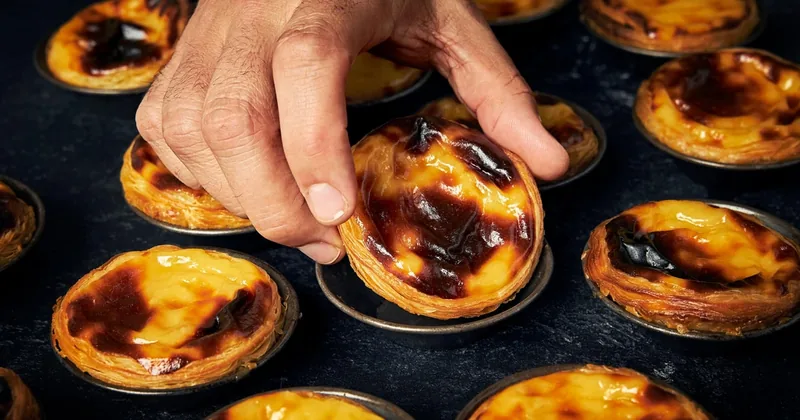
Laminate puff pastry from zero in a Baixa bakery with a pro pastry chef, then take your 3 tarts home in style.
Check dates for the bakery masterclassHow do you reheat pastéis de nata?
In the oven at 180°C (350°F) for 2 to 3 minutes, says Manteigaria. Not in the microwave: the custard warms, but the pastry goes soft.
Put them straight onto a tray in a preheated oven. America's Test Kitchen rewarms its tarts at the same temperature for 5 to 7 minutes, which suits a bigger muffin-tin tart. Add the cinnamon after reheating, not before.
Can you take pastéis de nata on a plane?
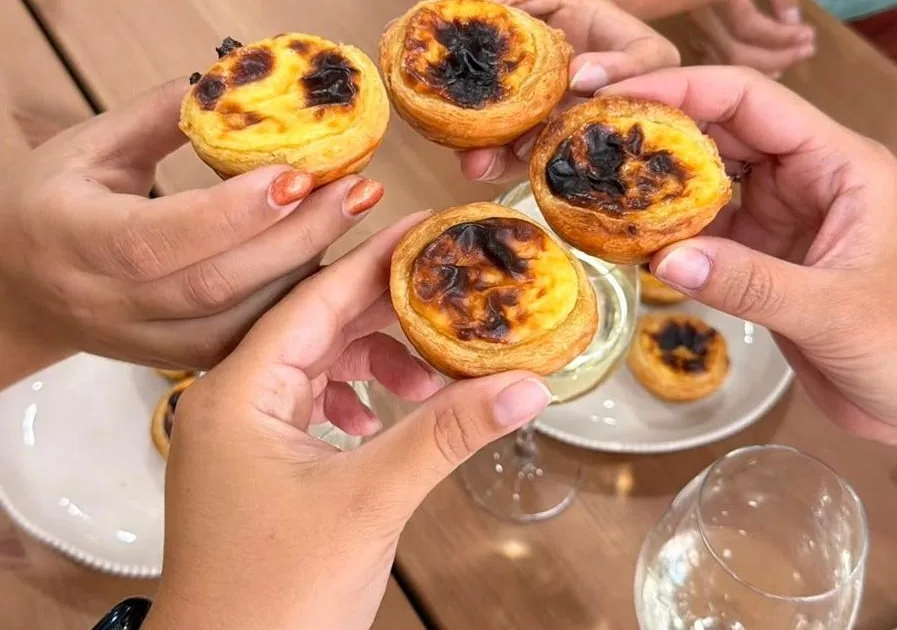
Generally yes, in hand luggage. A pastel de nata is a solid food and the custard is set, not a liquid, but check your airline before you fly.
Carry them in a bakery box, flat and on top of your bag. Manteigaria packs any number, takes email orders one working day ahead and phone orders on the day, paid in cash or by Multibanco in the shop. For a flight home, buy on the morning you leave and eat them within a day.
Some classes send you off with a box of your own. The Porto workshop with a drink packs 2 or more tarts in a cardboard box, and the bakery masterclass includes 3 tarts.

Shape and bake your tarts in central Porto with a glass of port, wine or a mimosa, then carry 2 or more home in a pastry box. 4.9 stars from 2,524 reviews.
Explore the Porto workshop with a drink Tour detailsFrequently asked questions
Why is the bottom of my pastel de nata soggy?
The pastry was too thick at the base or the oven too cool. Press the base thin, chill the lined tin and bake on a preheated stone.
Can I make the custard ahead?
Yes. America's Test Kitchen rests its custard for 1 hour at room temperature or up to 12 hours in the fridge. Whisk it again before filling.
Are pastéis de nata vegan?
No. They contain milk, butter and eggs, and Manteigaria lists gluten, eggs, milk and cinnamon as allergens. The Porto class with port wine offers vegan options on request.
Can I freeze pastéis de nata?
Manteigaria does not recommend it. If you must, thaw them at room temperature, then warm them at 180°C (350°F) for 2 to 3 minutes.
Ready to book
Choose your class
Free cancellation up to 24 hours before on every option. Prices are from-prices in USD and move with the season.
Lisbon Pastel de Nata Baking Class
- All ingredients and utensils
- Chefs or instructors
- Homemade juice, coffee and water
Pastel de Nata Masterclass in a Real Bakery
- 3 pastéis de nata
- A barista-made coffee or cold drink
- Certificate of participation
Porto Pastel de Nata Workshop with a Drink
Custard, shaping and baking with a glass of port, wine or a mimosa