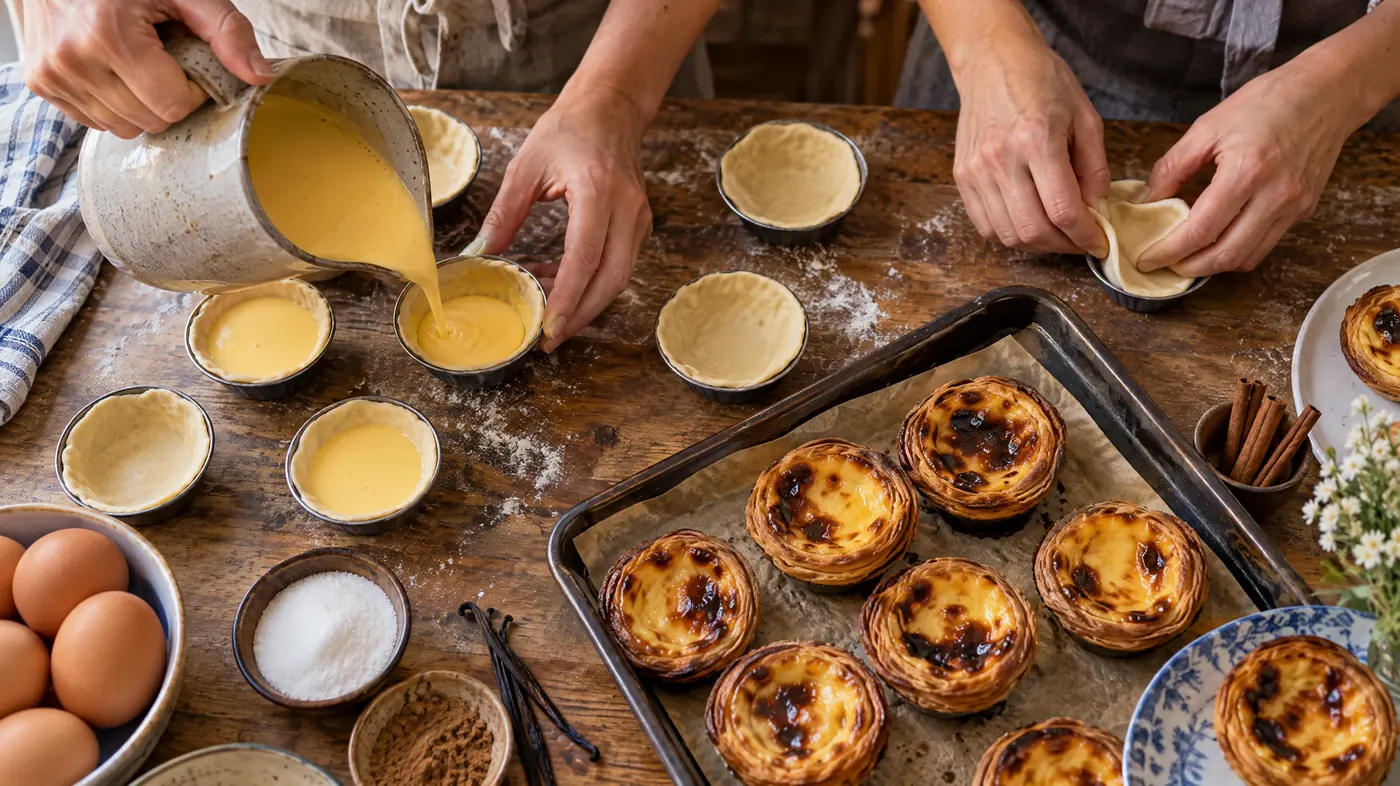
Booking choice: The small-group class by Belém, from $72 per person. Check dates Tour details
Portugal's convents and monasteries made sweets for centuries, many of them with egg yolks and sugar. The pastel de nata is the one that escaped the cloister and conquered the world.
Here is the story as the original bakery tells it, with the dates checked against UNESCO, the bakery's own history page and the record of its spread abroad. Most classes open with this story while the tarts bake.
The quick answer
Monks at the Jerónimos Monastery in Belém made the first tarts. When Portugal shut its convents and monasteries in 1834, someone from the monastery sold pastries in the sugar refinery's shop next door, and in 1837 the Pastéis de Belém bakery began baking them to the monastery's secret recipe, still used today. The name means cream pastry, though it has no cream. The class by Belém teaches the tart in the quarter where it was born, from $72.
Who created the pastel de nata?
The monks of the Jerónimos Monastery in Belém, according to the Pastéis de Belém bakery and most histories. Their recipe went public after the monastery closed in 1834.
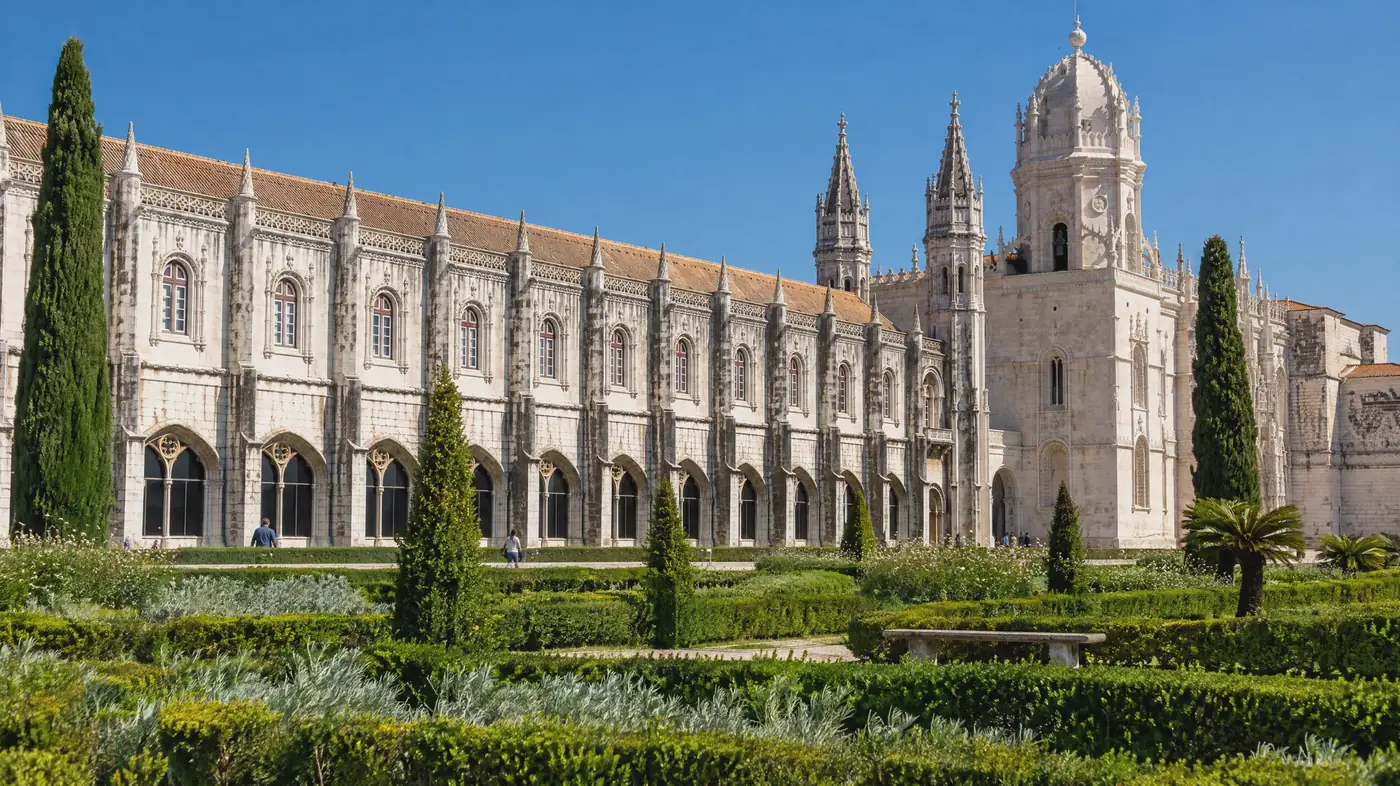
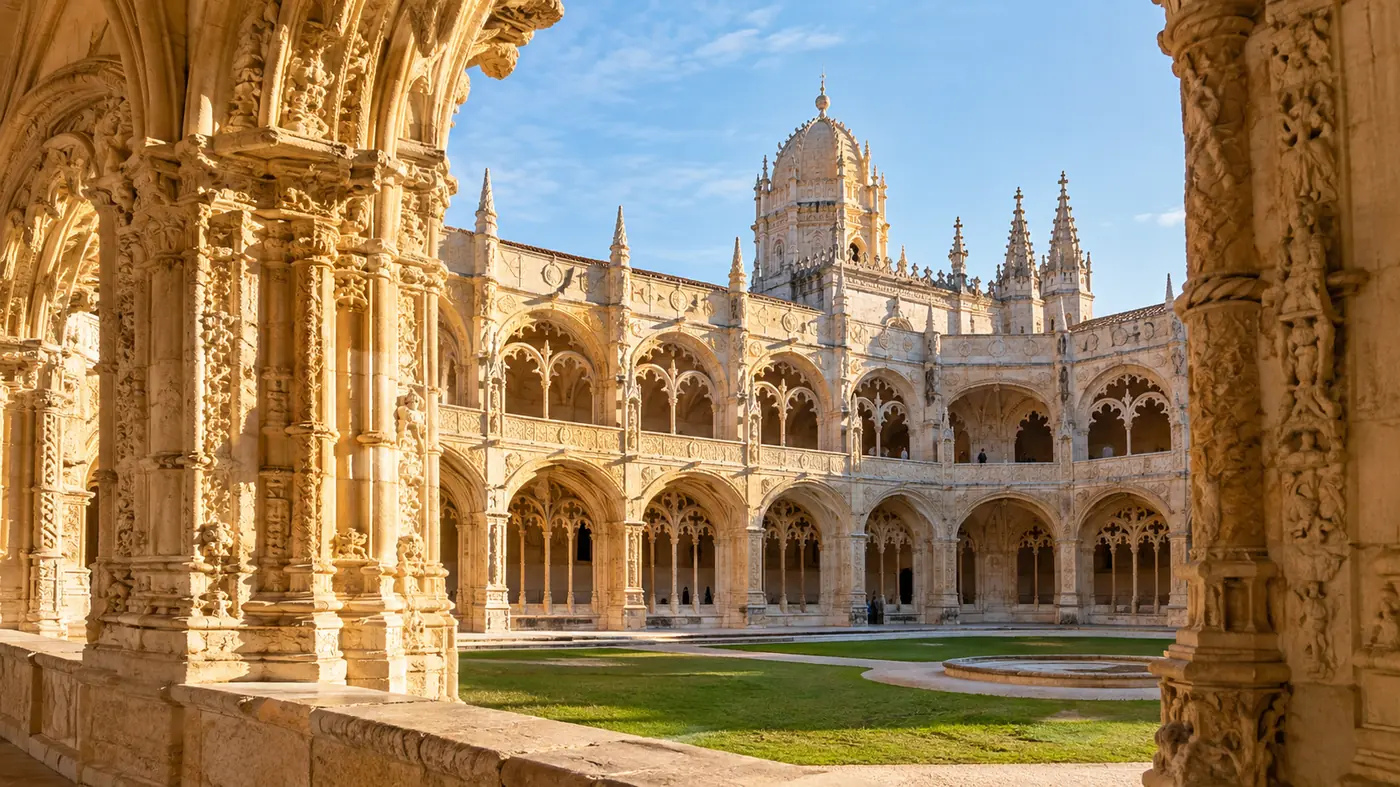
The monastery was begun in 1502, says UNESCO, and the monks of the Order of Saint Jerome lived there until the 19th century. Next door stood a sugar-cane refinery with a small general store. After the 1820 liberal revolution, all convents and monasteries in Portugal were shut in 1834 and the clergy expelled. In an attempt to survive, someone from the monastery sold sweet pastries in that shop.
They sold fast. People soon called them pastéis de Belém, after the place.
Why did monasteries make egg-yolk pastries?
Convents and monasteries had plenty of eggs, and sugar was arriving from Portugal's colonies. Yolk-rich sweets became a convent speciality all over the country.
The usual story says the egg whites went to starch clothes, leaving yolks to spare. Wikipedia flags the starch part as disputed, so take it as tradition. What is certain is that yolk-and-sugar sweets became a national style, and Wikipedia notes that leftover yolks fed a whole family of cakes and pastries.
The tart may be older than Belém too. Manteigaria points to the 16th-century cookbook of the Infanta D. Maria of Portugal, which has recipes for "pastéis de leite", milk tarts.
Hear the tart's story while your tray bakes, in a kitchen near Belém with port and a ginjinha tasting.
Check dates for the Lisbon baking classWhat happened in 1834 and 1837?
In 1834 Portugal closed its monasteries. In 1837 baking began in buildings attached to the refinery, following the monastery's secret recipe, and the Pastéis de Belém bakery was born.
The key dates, from the bakery, UNESCO and the record of the tart's spread:
| Year | What happened |
|---|---|
| 1502 | Building of the Jerónimos Monastery begins in Belém |
| 1820 | The liberal revolution, which led to the closing of religious orders |
| 1834 | All convents and monasteries in Portugal are shut; pastries go on sale in the refinery shop |
| 1837 | Baking begins next to the refinery, to the monastery's secret recipe |
| 1983 | The Jerónimos Monastery and the Belém Tower become a UNESCO World Heritage Site |
| 1989 | Lord Stow's Bakery opens in Coloane, Macau, and the tart takes off in Asia |
| 2009 | The Guardian lists pastéis de Belém among the 50 best things to eat; the Lisbon contest starts |
| 2011 | A public vote names the pastel de Belém one of Portugal's Seven Wonders of Gastronomy |
| 2026 | Pastelaria Aloma wins "O Melhor Pastel de Nata" for the sixth time |
Why is it called pastel de nata?
Nata means cream, so the name is "cream pastry". The custard has no cream at all, as Manteigaria points out; the richness comes from egg yolks.
The name describes the creamy filling, not an ingredient. The plural is pastéis de nata. The older name, pastel de Belém, now belongs to one bakery: Pastéis de Belém is a registered trade name, so every other bakery sells pastéis de nata.
Outside Portugal the tart goes by Portuguese custard tart or Portuguese egg tart. Our pastel de nata vs pastel de Belém guide covers the name in full.
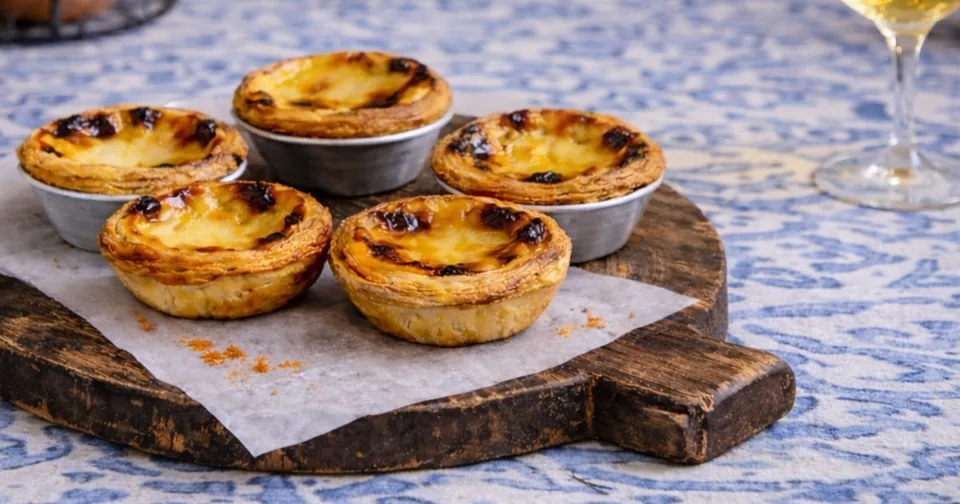
How did Belém become a pastry stop?
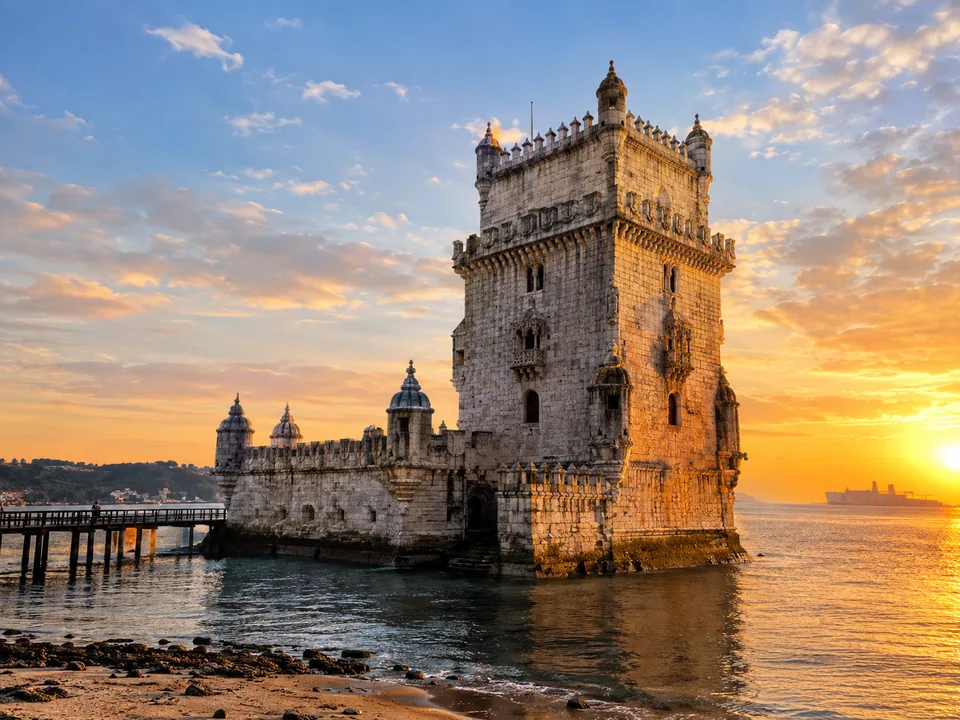
Visitors came for the monastery and the Belém Tower and stayed for the tarts. Belém was then far from Lisbon and reached mainly by steam-boat.
The bakery's history page says the grandeur of the monastery and the tower drew visitors, who soon grew used to the pastries. That pattern has never changed. The tower was built to mark Vasco da Gama's voyage, says UNESCO, and the two monuments together are a World Heritage Site since 1983.
Today Belém is a short ride on tram 15E or the Cascais line train, and the bakery sells over 20,000 tarts a day, according to Wikipedia.
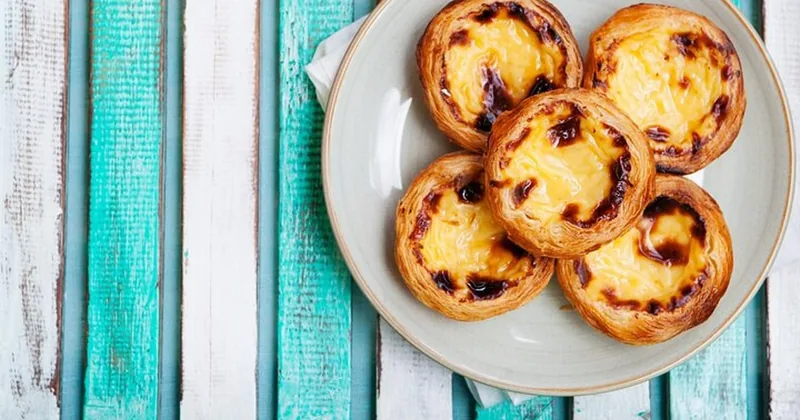
Learn the craft in the quarter where it was born, on Rua da Junqueira, in a group of eight at most, with everything made from scratch.
Explore the small-group class by Belém Tour detailsIs the original recipe still secret?
Yes. Pastéis de Belém says only its master confectioners know it, that they make the tarts by hand in a secret room and that the recipe is unchanged since 1837.
That secret is the whole point of the Belém name. It also means no class teaches the original. The class by Belém says so in its own listing: it does not own the original recipe and teaches its chef's version instead.
Every other bakery has its own recipe. Manteigaria lists its ingredients openly and says the secret is in the making. Our pastel de nata recipe gives you a version to bake at home.
How did the pastel de nata spread around the world?
With Portuguese emigrants and through Macau, where the British baker Andrew Stow opened Lord Stow's Bakery in 1989 after tasting the tarts in Belém.
Stow opened his bakery in Coloane village on 15 September 1989, according to Goldthread, and locals called his tart the Portuguese egg tart to tell it apart from the Cantonese one. The Macau version spread across Asia, and Wikipedia notes that KFC sells it from mainland China to Singapore.
Portuguese bakeries followed. Manteigaria now has shops in Paris, Bordeaux, Madrid, Macau and Hong Kong, as well as Lisbon, Porto and Braga.
Laminate the pastry from zero in a working Baixa bakery with a professional pastry chef. 3 tarts and a certificate to take home.
Check dates for the bakery masterclassWhen did the pastel de nata become a national symbol?
It always was one at home, but 2009 and 2011 made it official: The Guardian put it among the 50 best things to eat in the world, and a public vote named it one of Portugal's Seven Wonders of Gastronomy.
Lisbon's own contest, "O Melhor Pastel de Nata", also began in 2009, started by the gastronome Virgílio Gomes with Edições do Gosto. Its 2026 winner, Pastelaria Aloma, is the subject of our best pastel de nata in Lisbon guide.
The tart is also how many visitors take Portugal home. In two hours a class gives you the story, the technique and a tray of your own.
Frequently asked questions
How old is the pastel de nata?
The Belém bakery has baked it since 1837, and the monks made it before that. Manteigaria traces milk tarts back to a 16th-century royal cookbook.
Is the pastel de nata from Lisbon?
Yes. It comes from Belém, a riverside district in the west of Lisbon, next to the Jerónimos Monastery.
Who owns the original recipe?
The Pastéis de Belém bakery. Only its master confectioners know the recipe, and it has not changed since 1837, the bakery says.
Do pastel de nata classes teach the history?
Most do. The bakery masterclass starts with the tart's history, and the class by Belém tells it while the tarts are in the oven.
Ready to book
Choose your class
Free cancellation up to 24 hours before on every option. Prices are from-prices in USD and move with the season.
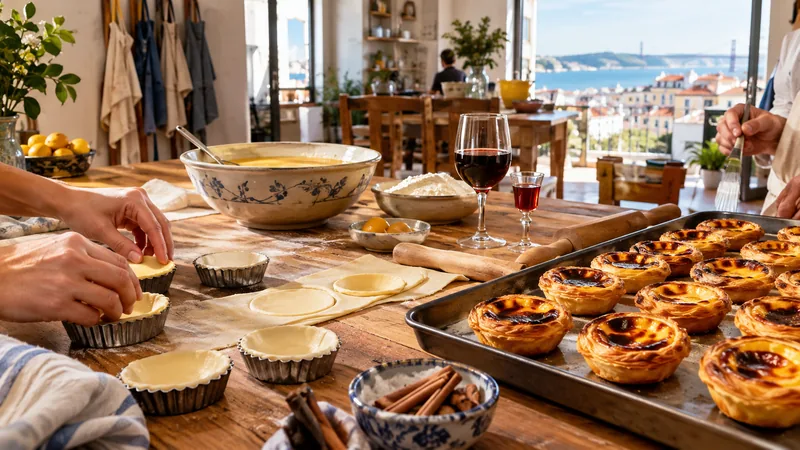
Small-Group Pastéis de Nata Class by Belém
- Pastry-making lesson
- Your own pastéis de nata
- Coffee, tea and water
Lisbon Pastel de Nata Baking Class
- All ingredients and utensils
- Chefs or instructors
- Homemade juice, coffee and water
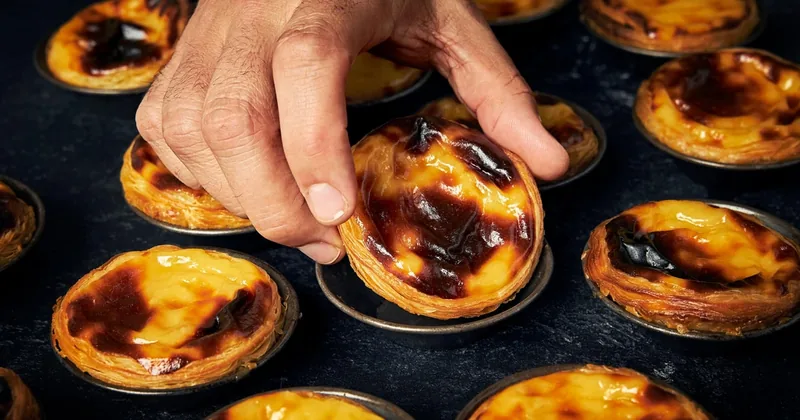
Pastel de Nata Masterclass in a Real Bakery
- 3 pastéis de nata
- A barista-made coffee or cold drink
- Certificate of participation