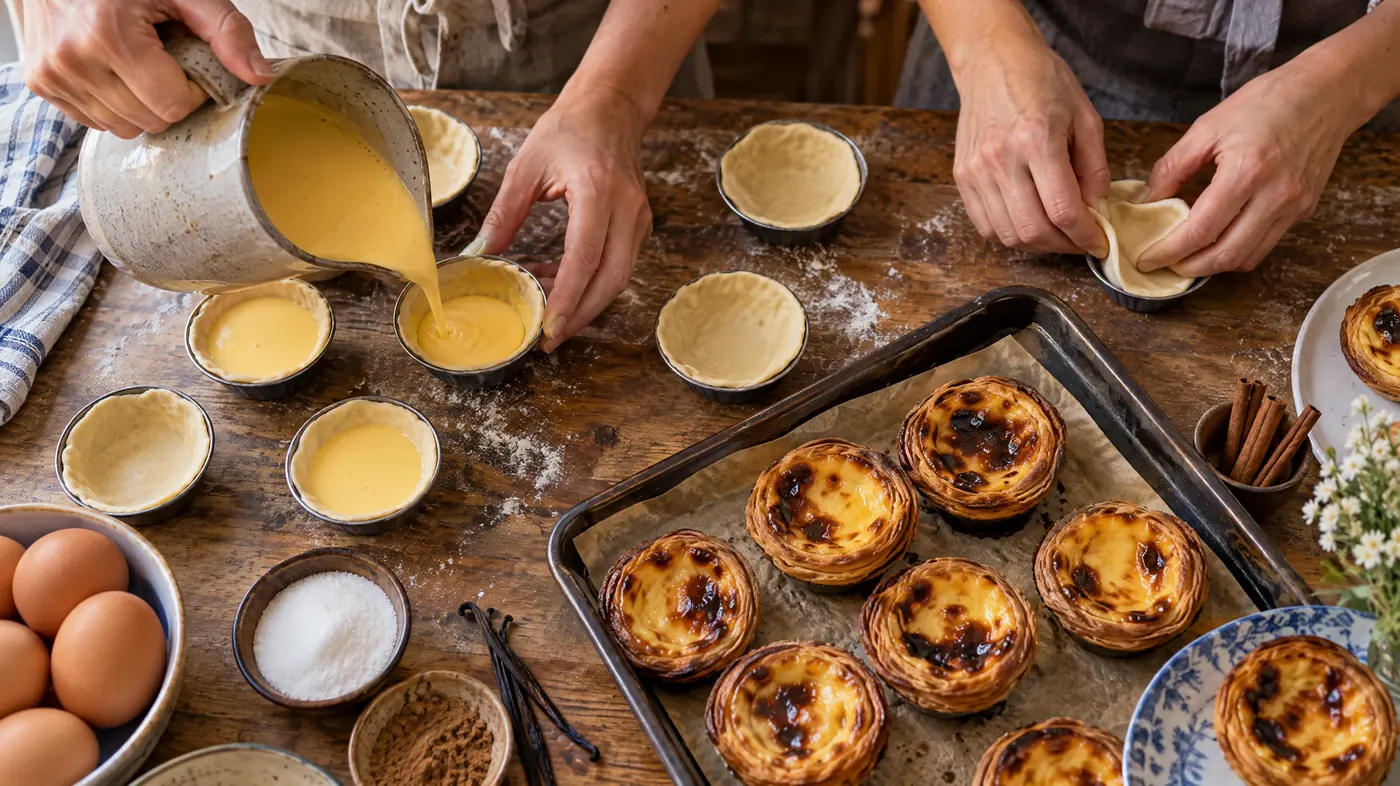
Booking choice: The Lisbon baking class, from $61 per person. Check dates Tour details
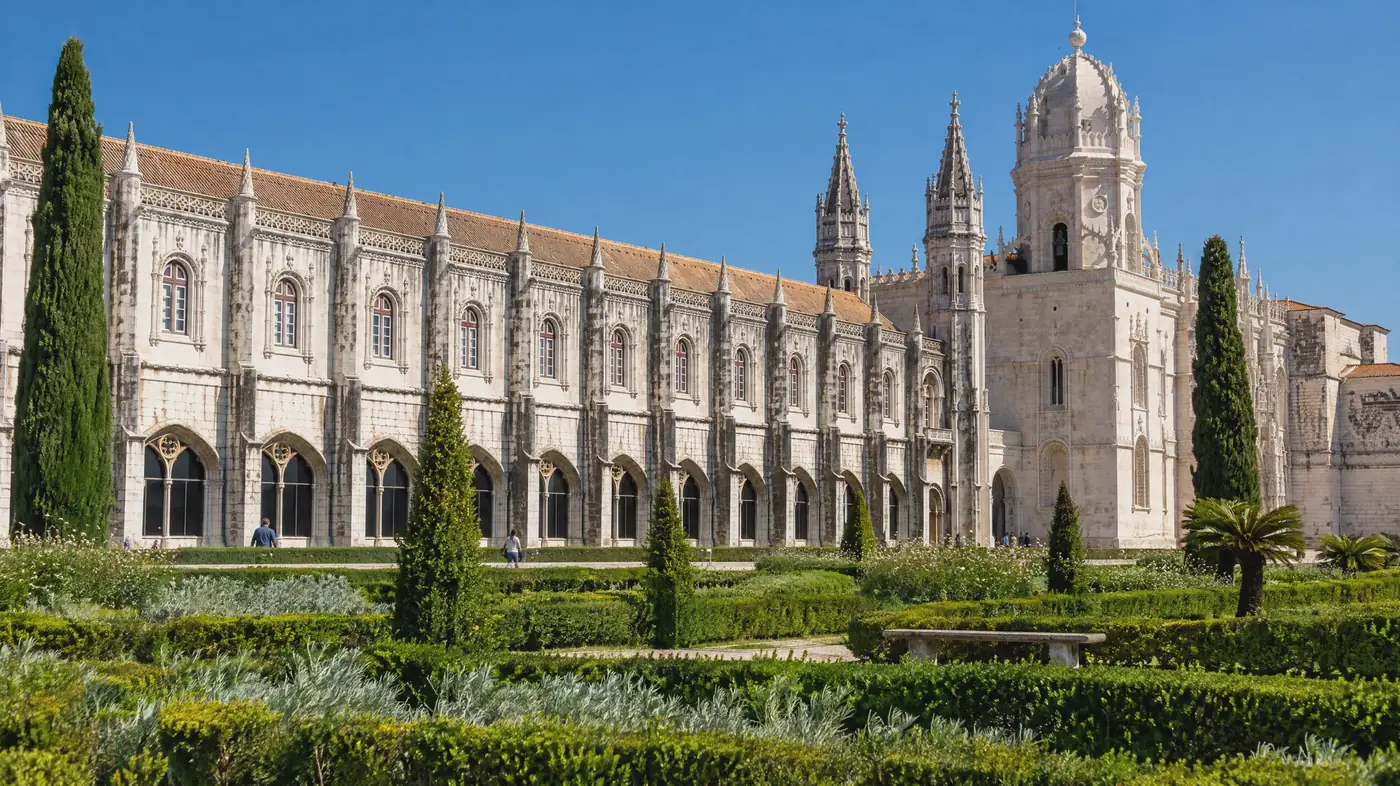
Nobody outside one room in Belém knows the original recipe, and that is fine. The pastel de nata sold all over Portugal is an open recipe, and Manteigaria, one of Lisbon's best-known bakeries, says its own has no secret ingredients at all: flour, butter, margarine, eggs, milk, water, sugar, cornflour, a cinnamon stick and lemon juice.
What follows is a home version with exact quantities, based on the America's Test Kitchen recipe, with the cinnamon and lemon that Portuguese cooks put in the milk. It takes about four hours, most of it chilling time. If the pastry part scares you, a class in Lisbon teaches it in two.
The quick answer
Laminate a simple flour-and-water dough with butter, roll it into a tight log, slice it and press the rounds into tins. Fill them with a thin custard of egg yolks, milk thickened with a little flour and a sugar syrup scented with cinnamon and lemon. Bake as hot as your oven goes, on the top half, until the tops blister and char in spots. The Lisbon baking class walks you through it from $61, and the bakery masterclass has you laminate the pastry from zero.
What is the traditional recipe for pastéis de nata?
Crisp laminated pastry, rolled into a log and pressed into small tins, filled with an egg-yolk custard made with a sugar syrup and baked in a very hot oven.
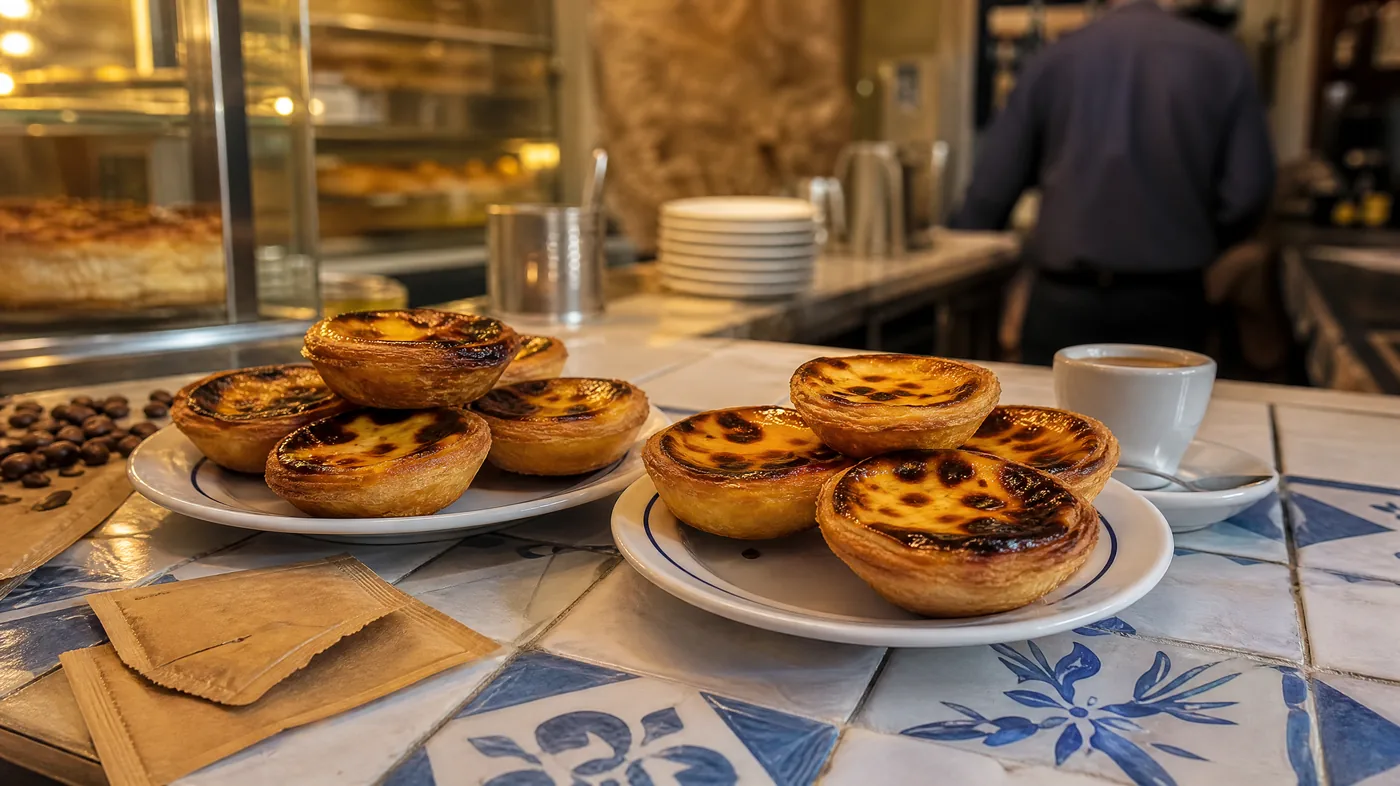
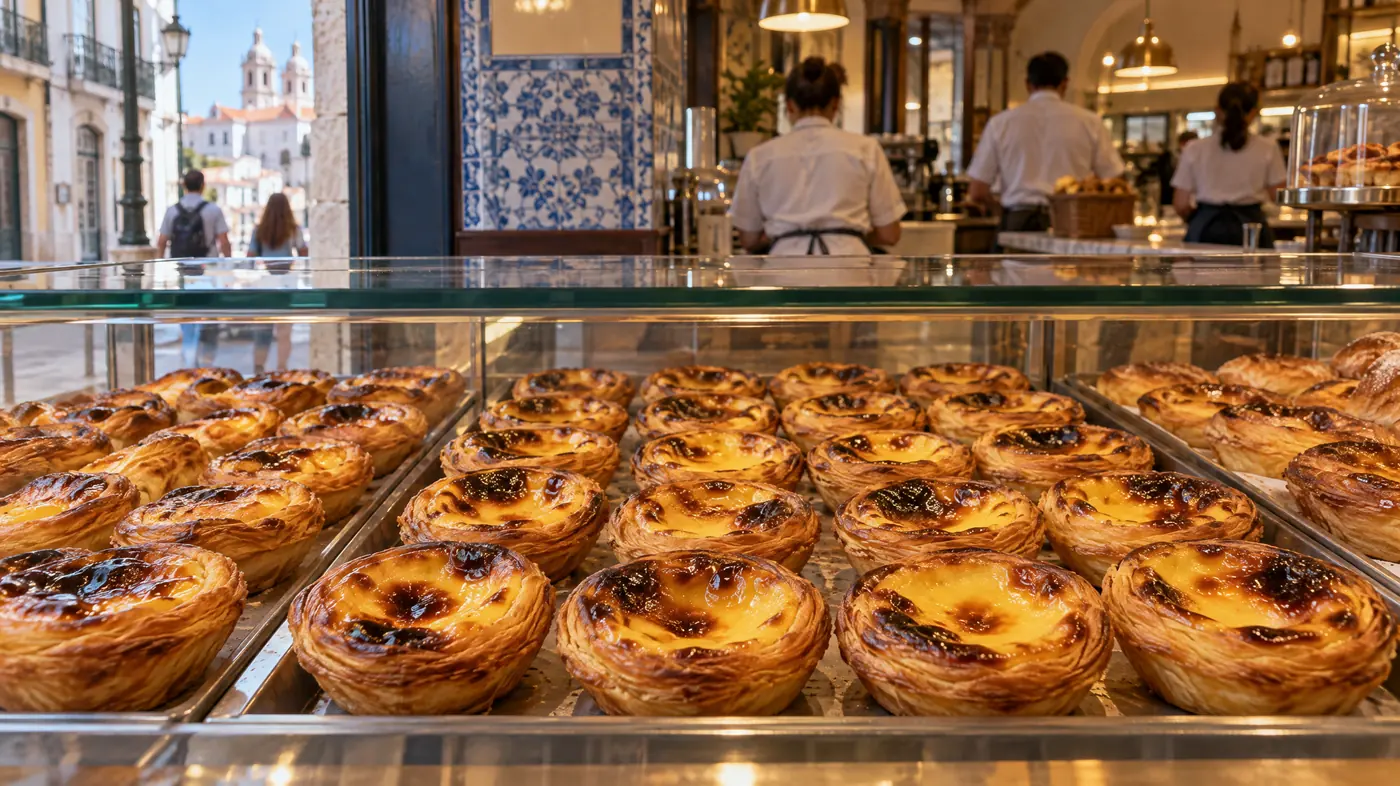
Three parts make the tart. The pastry is a plain dough of flour, water and salt, layered with butter and rolled up like a Swiss roll, so each slice shows a spiral. Pressed into the tin, that spiral fans out into thin, shattering layers. The custard is egg yolks and milk, thickened with a spoon of flour or cornflour and sweetened with a syrup boiled with cinnamon and lemon peel. The oven does the rest.
Manteigaria describes its own process in four steps: the custard, the dough, the roll and the oven. That is the order a class follows too.
What goes in pastel de nata custard?
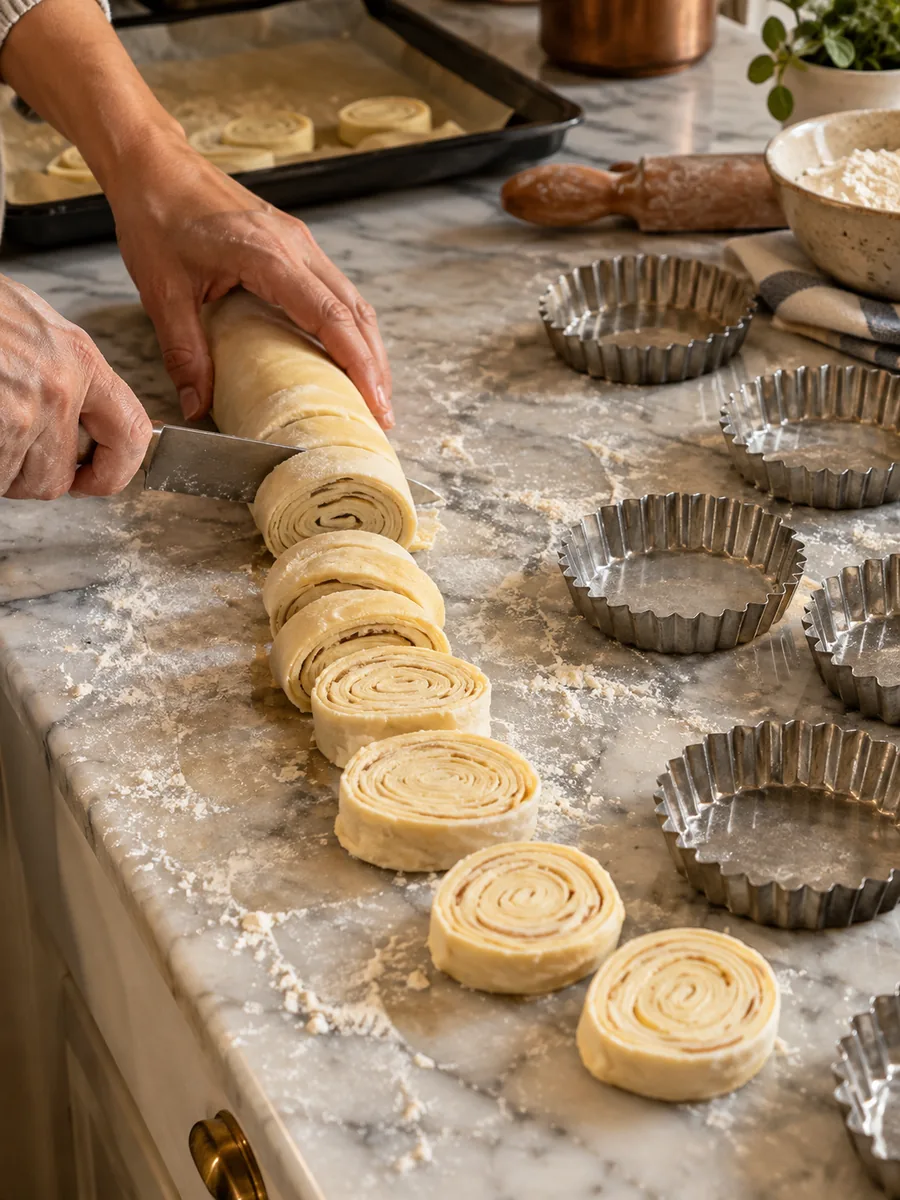
Egg yolks, whole milk, a little flour or cornflour, sugar boiled into a syrup with water, a cinnamon stick and lemon peel. No cream, despite the name.
Nata means cream in Portuguese, yet the classic custard has none. Manteigaria says so in its own FAQ. The richness comes from the yolks. Some modern recipes add cream anyway, like the giant tart on BBC Good Food, but a Lisbon bakery tart is a milk custard.
The Portuguese method is different from a French pastry cream. You cook a syrup of sugar and water separately, with the cinnamon and lemon in it or in the milk, and pour it hot into the thickened milk before the yolks go in. The custard stays thin, almost pourable, until the oven sets it. Our history guide explains why convents had so many yolks to use.
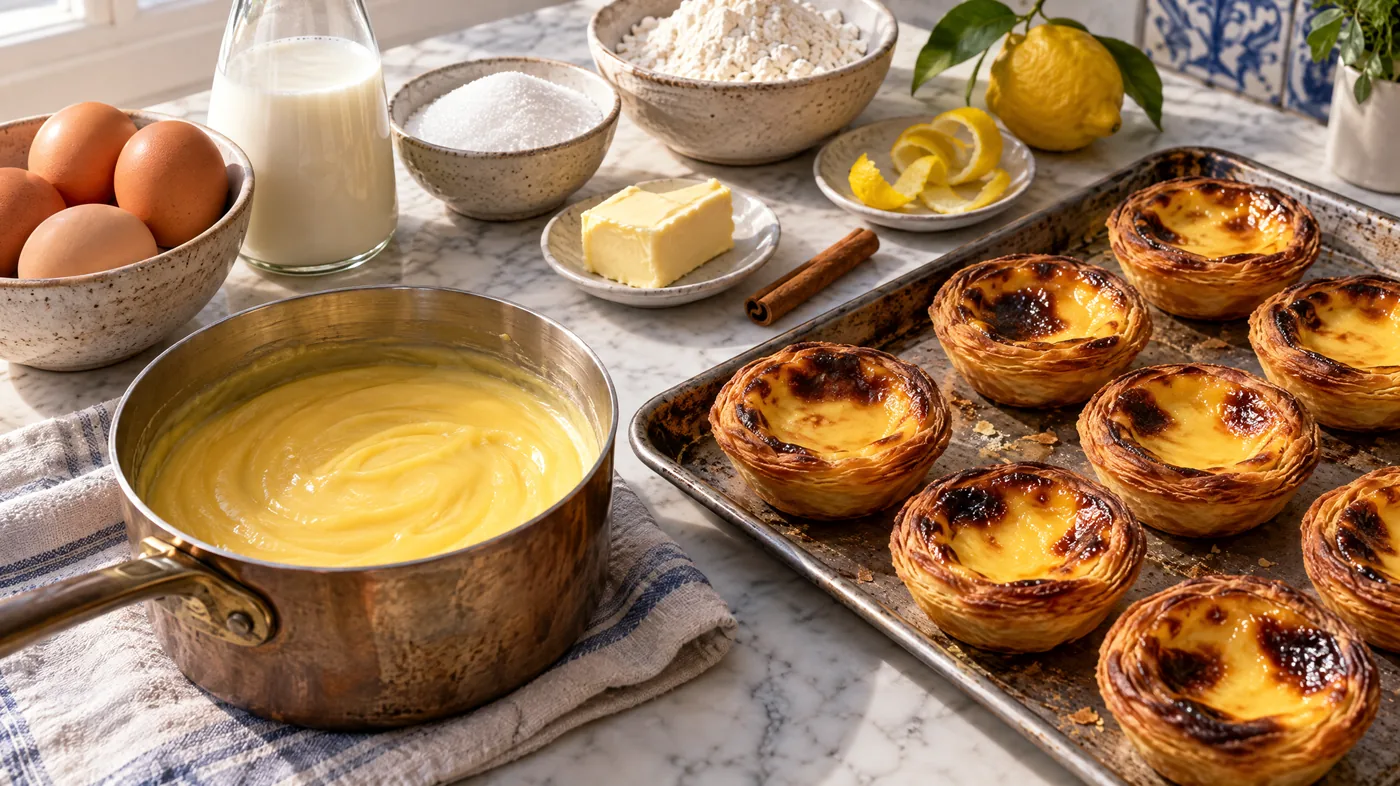
Make the custard, shape the dough and bake a tray near Belém, with port and a ginjinha tasting while it bakes.
Check dates for the Lisbon baking classWhat do you need for 12 pastéis de nata?
About 177 g of flour and 213 g of butter for the pastry, then 6 egg yolks, 300 ml of milk and 248 g of sugar for the custard. A 12-cup muffin tin works.
These are the America's Test Kitchen quantities, converted to metric with US measures in brackets. We add the cinnamon stick and lemon peel that Portuguese recipes use. The test kitchen lists vanilla as optional instead.
| Part | Ingredient | Quantity |
|---|---|---|
| Pastry | Plain flour | 177 g (1 1/4 cups) |
| Pastry | Salt | 1/2 tsp |
| Pastry | Water | 120 ml (1/2 cup) |
| Pastry | Unsalted butter, soft | 213 g (15 tbsp) |
| Custard | Whole milk | 300 ml (1 1/4 cups), split 60 ml and 240 ml |
| Custard | Plain flour | 3 tbsp |
| Custard | Salt | 3/4 tsp |
| Custard | Large egg yolks | 6 |
| Custard | Sugar | 248 g (1 1/4 cups) |
| Custard | Water | 120 ml (1/2 cup) |
| Flavour | Cinnamon stick and a strip of lemon peel | 1 of each |
| To serve | Ground cinnamon and icing sugar | A pinch, optional |
How do you make pastel de nata pastry?
Mix a soft dough, spread it with butter in three rounds, folding between each, then roll it into a tight log and chill it before slicing.
- Mix the flour, salt and water into a soft dough and rest it for 15 minutes.
- Roll it out to a thin rectangle, about 38 by 33 cm. Spread a third of the butter over it, fold it in three and roll it out again. Repeat twice with the rest of the butter.
- Roll the sheet up tightly from the short side into a log. Wrap it and chill it for at least 1 hour, or up to 12.
- Cut the log into 12 rounds. Stand each one spiral side up in a greased muffin cup and push it up the sides with a wet thumb, thinner at the base than at the rim. Chill the tin for another hour.
Cold and fast is the rule. If the butter melts into the dough, you lose the layers and the tart bakes up bready.
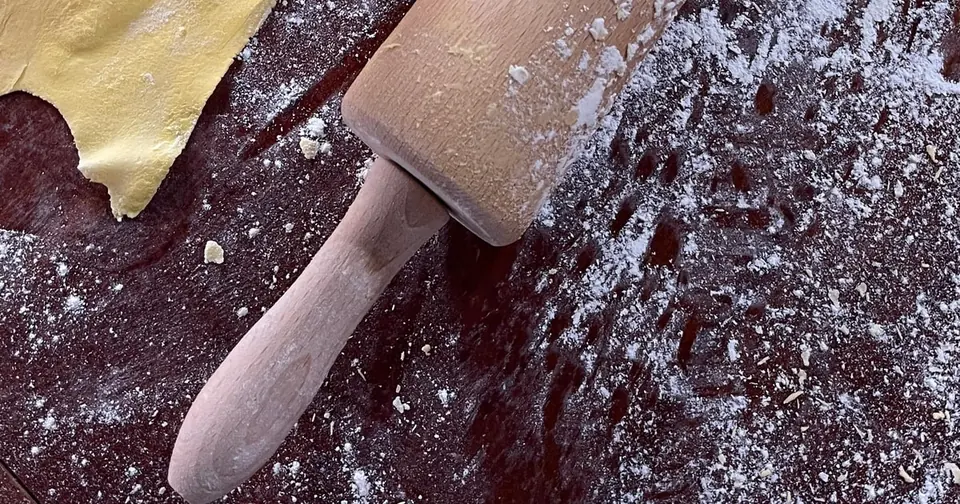
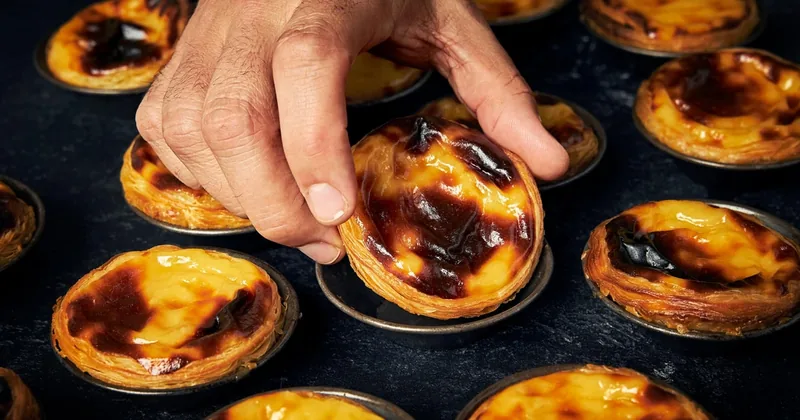
Laminate puff pastry from zero in a working bakery kitchen in the Baixa with a professional pastry chef, then eat 3 warm tarts with a barista drink. Up to 12 bakers.
Explore the bakery masterclass Tour detailsHow do you make the custard?
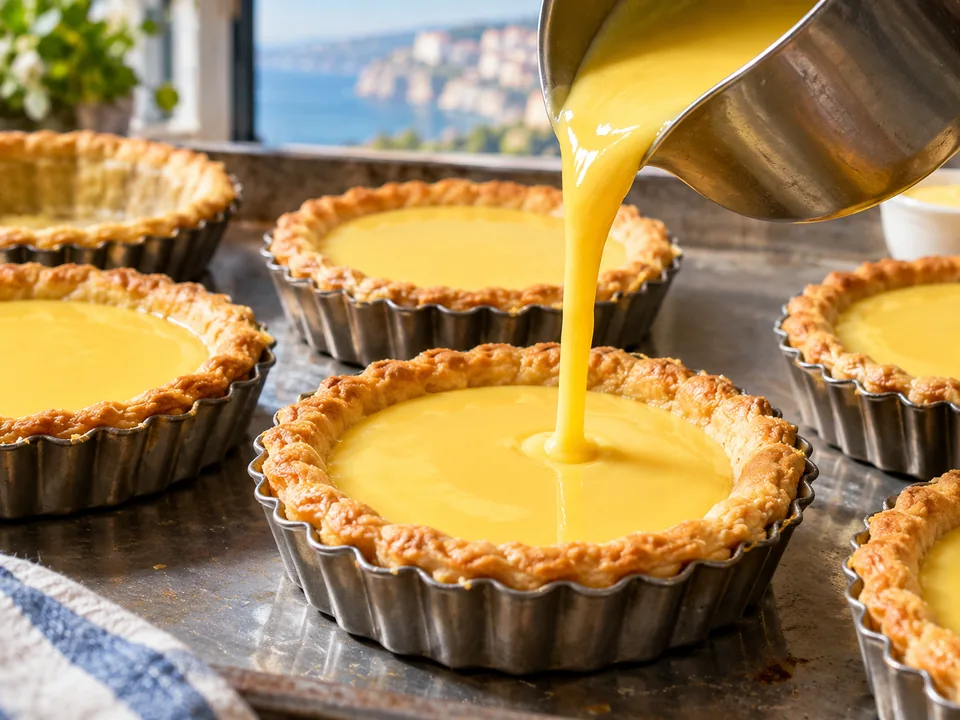
Cook the sugar into a hot syrup, whisk it into milk thickened with flour, then whisk that gently into the yolks, strain it and let it rest.
- Bring the sugar, the water and 240 ml of the milk to a simmer with the cinnamon and lemon peel, stirring until the sugar dissolves, about 2 minutes.
- Whisk the flour and salt into the other 60 ml of milk until smooth.
- Pour the hot sweet milk into the flour mixture, whisking, then whisk it slowly into the beaten yolks.
- Strain it into a jug and discard the cinnamon and peel. It will look thin. Rest it for 1 hour, or chill it for up to 12 hours.
Fill each case just below the rim. Overfilled tarts boil over and stick to the tin.
What temperature do you bake pastéis de nata at?
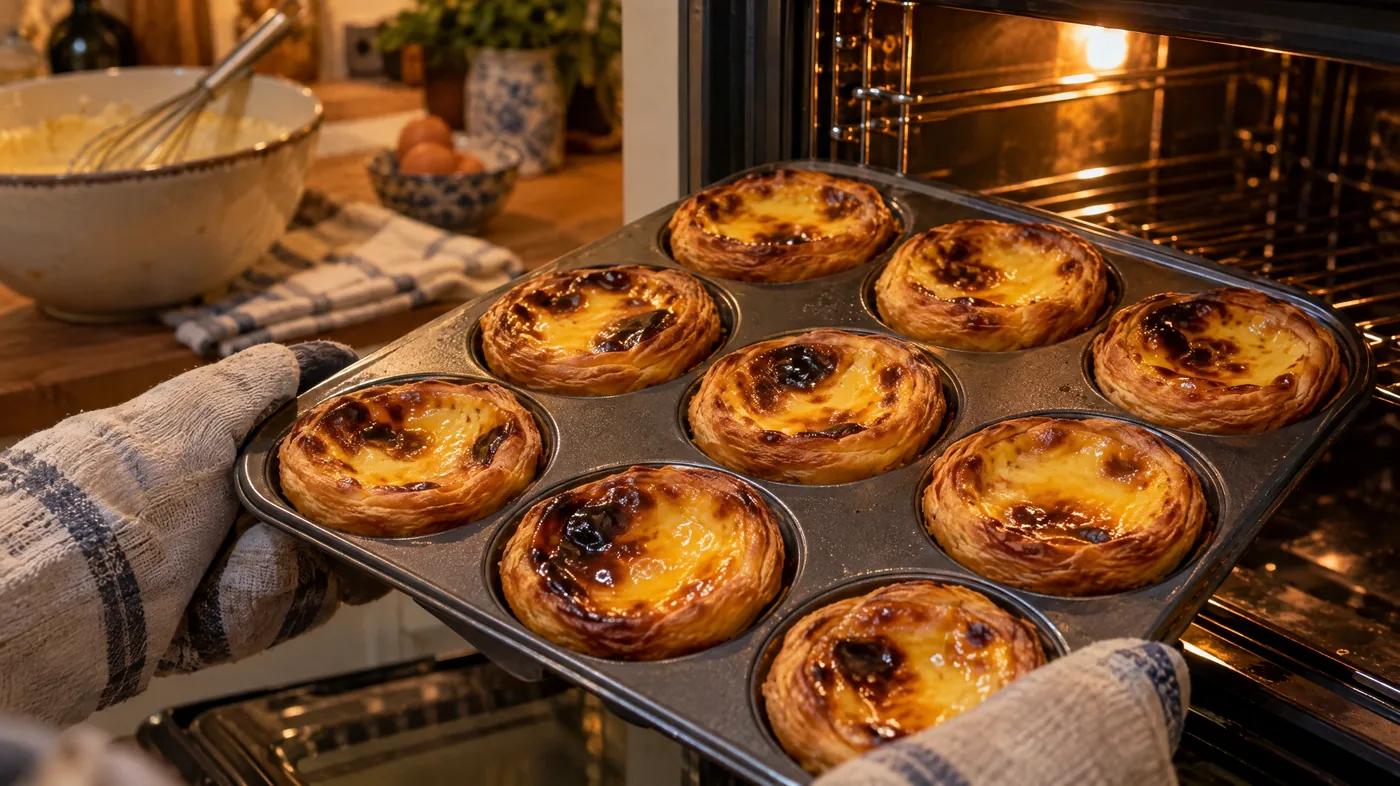
As hot as your oven goes. America's Test Kitchen bakes them at 230°C (450°F) for 27 to 30 minutes on a baking stone, and the chef Nuno Mendes goes to 260°C (500°F).
Bakeries bake the tarts in a very hot oven, so the pastry crisps and the custard blisters before it can curdle. A home oven cannot match that, which is why home recipes bake longer. Put a baking stone or a heavy tray on the upper-middle shelf and heat it for a good 45 minutes before the tin goes in.
Nuno Mendes, in his recipe for BBC Good Food, bakes his tarts at 260°C (240°C fan, 500°F) for about 5 minutes on a hot tray and then slides them under the grill for 2 minutes. If your tops are still pale, borrow that grill trick. Cool the tarts in the tin for 5 minutes, then on a rack.
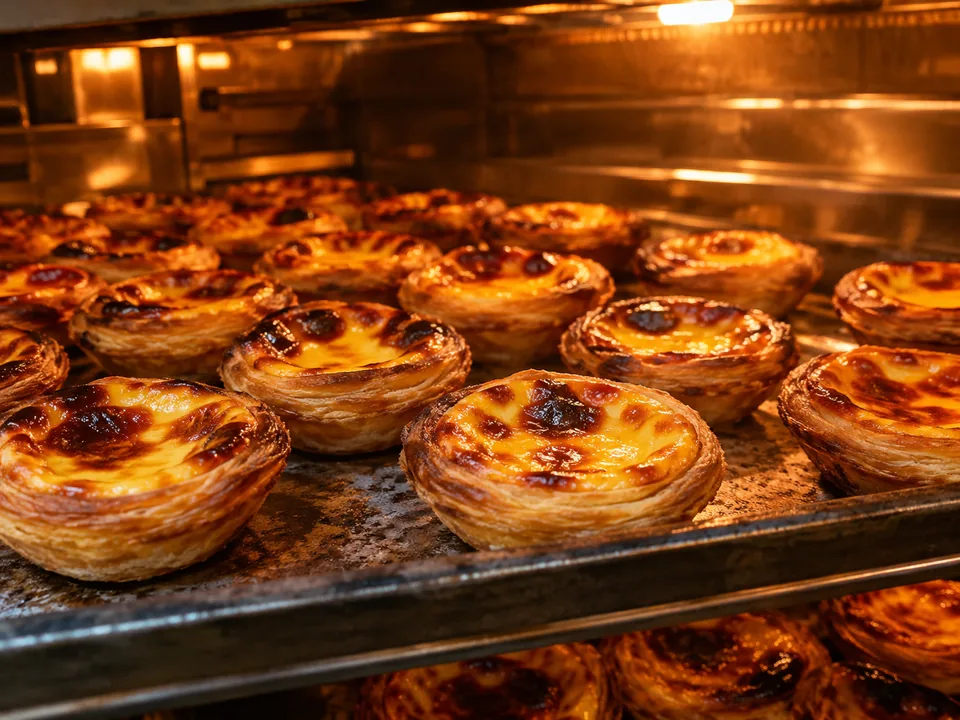
Bake by Belém in a group of eight at most, with everything made from scratch, pastry included.
Check dates for the small-group class by BelémWhat is the secret of the pastel de nata?
Thin pastry, a custard that barely sets and a fierce oven. The one recipe that is truly secret belongs to Pastéis de Belém, made the same way since 1837.
Most failed home batches go wrong in one of these places:
- Thick pastry at the base. Push it thin at the bottom and leave it thicker at the rim.
- Warm butter. Chill the log and the lined tin, and work quickly.
- Overcooked custard. It should wobble when it comes out. It sets as it cools.
- A cool oven. Pale tops mean the oven was not hot enough, not that the tarts need longer.
The Belém bakery says its recipe is known only to the master confectioners who work in a secret room. Our pastel de nata vs pastel de Belém guide explains why theirs carries a different name.
Is it easier to learn the recipe in a class?
Yes, for the pastry. Lamination is hard to learn from a page, and in a class you also get a professional oven and the recipe to take home.
In two hours an instructor shows you how thin to roll, how to press the spiral into the tin and what the custard should look like. You eat the tarts warm, and most classes send you home with the recipe. Classes differ in one big way, which is whether you make the pastry yourself. The bakery masterclass, the class by Belém and the two-recipe class all laminate the dough in class. Our guide to choosing a class compares all ten.
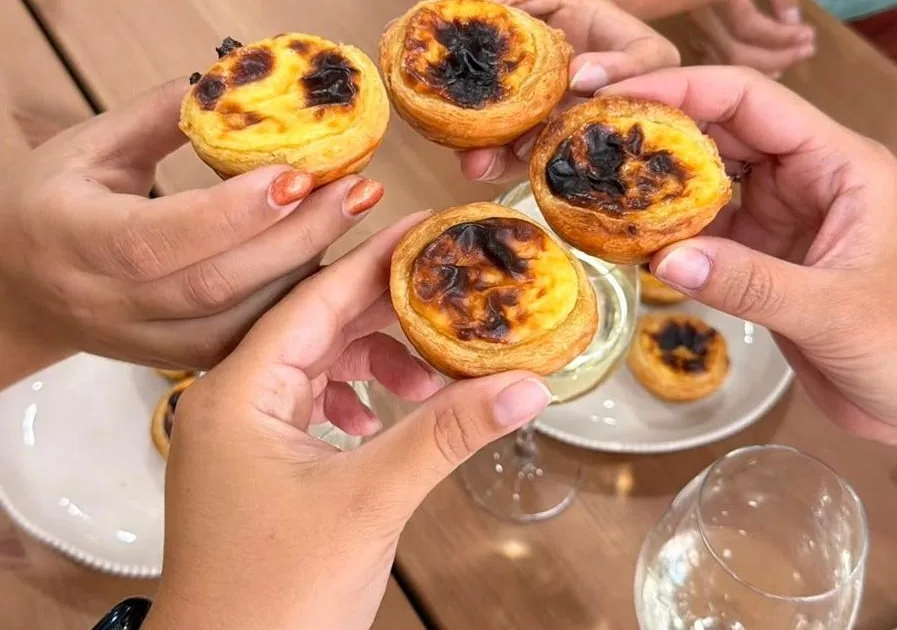
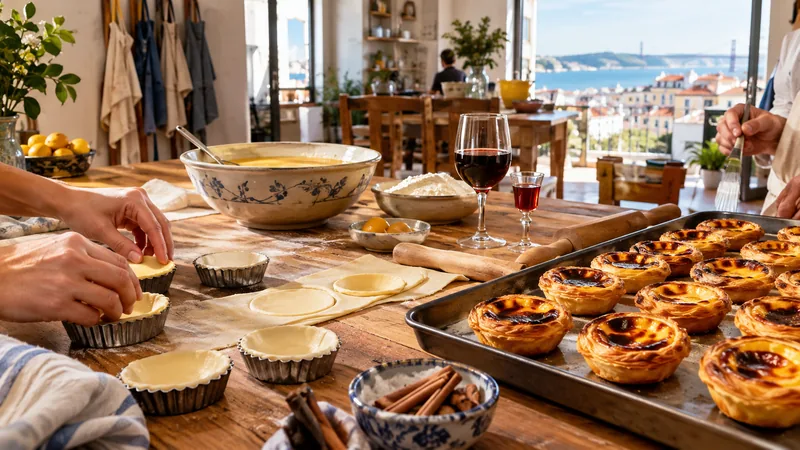
Bake pastéis de nata step by step in a cosy kitchen near Belém, with juice, coffee, port and a ginjinha tasting. 4.9 stars from 3,331 reviews.
Explore the Lisbon baking class Tour detailsFrequently asked questions
What is in the Manteigaria pastel de nata?
Manteigaria lists flour, butter, margarine, eggs, milk, water, sugar, cornflour, a cinnamon stick and lemon juice. It says the secret is in how they mix them, not in a hidden ingredient.
Can I use ready-made puff pastry?
Yes. Roll an all-butter sheet up tightly into a log and slice it as you would homemade pastry. The layers are fewer, but it saves about two hours.
How much sugar is in a pastel de nata?
The America's Test Kitchen recipe uses 248 g of sugar for 12 tarts, about 20 g each. Manteigaria puts its tart at about 200 kcal.
Why is my custard runny after baking?
It needs to cool. The custard leaves the oven with a wobble and sets in about 30 minutes on a rack. If it is still liquid then, the oven was too cool.
Ready to book
Choose your class
Free cancellation up to 24 hours before on every option. Prices are from-prices in USD and move with the season.
Lisbon Pastel de Nata Baking Class
- All ingredients and utensils
- Chefs or instructors
- Homemade juice, coffee and water
Pastel de Nata Masterclass in a Real Bakery
- 3 pastéis de nata
- A barista-made coffee or cold drink
- Certificate of participation
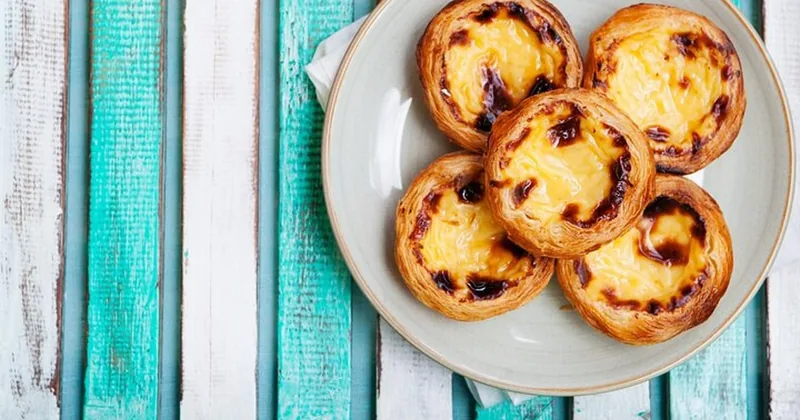
Small-Group Pastéis de Nata Class by Belém
- Pastry-making lesson
- Your own pastéis de nata
- Coffee, tea and water